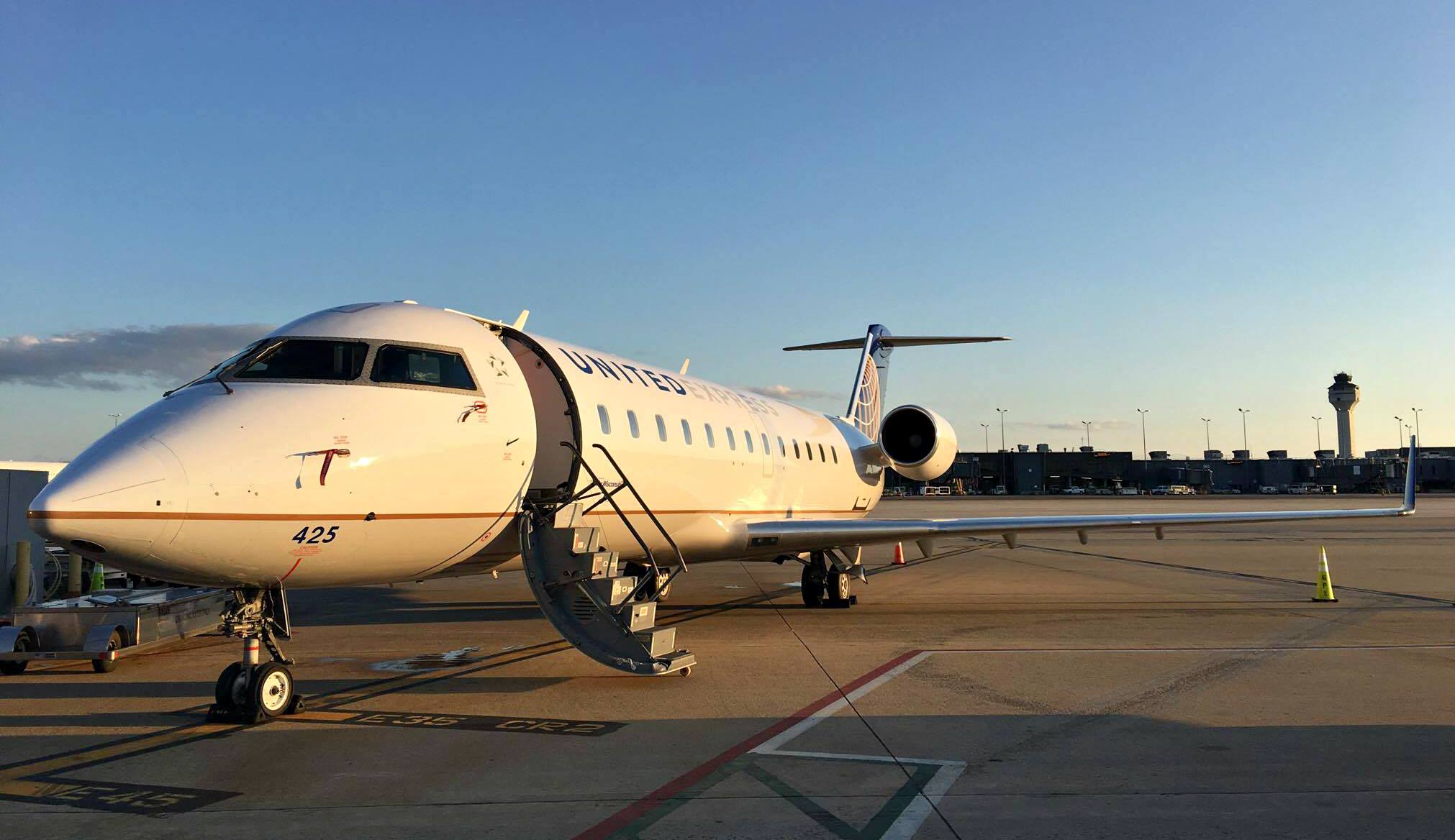
Enilria flags an offer in Victoria, Texas where each resident booking a roundtrip flight from their airport received $100 in order to bolster their subsidized United Express regional jet service to Houston. SkyWest receives “nearly $7 million for the service.”
Victoria, Texas has had one of the highest subsidies per passenger in the Essential Air Service program. It’s only about 100 miles from Austin and also from San Antonio. It’s just 110 miles from Houston Hobby and 120 miles from Houston Intercontinental. (It’s also 83 miles from Corpus Christi.) While some people like the convenience of flying in and out of Victoria on a small regional jet, those connections add travel time and connecting risk, and many residents just prefer to drive somewhere else to start their flight. They have options.
Essential Air Service was created by the 1978 Airline Deregulation Act as a temporary measure to soften the blow of deregulation. It provided for a ’10 year transition’ period in which small community service could receive subsidies. The program was supposed to end in 1988. In Tyranny of the Status Quo (1984), Milton Friedman wrote “Nothing is so permanent as a temporary government program.”
- About 175 communities have been receiving subsidies. More than a quarter of those are in Alaska.
- Subsidized cities are supposed to have at least 10 passengers per day, though this requirement can be waived. Many of the planes fly largely empty.
- Airports within 210 miles of a medium hub or larger used to be capped at a subsidy of $200 per passenger. However, Congress more than tripled this in 2024 to $650 per passenger for airports within 175 miles of the larger facility.
2024’s FAA reauthorization more than doubled funding for the program, with promised increases in future years. Not only didn’t the program die in 1988, it grew to $22 million in 1998 and to a discretionary $155 million in 2018. It was authorized at:
- $340 million for fiscal year 2025
- $342 million for fiscal year 2026 and 2027
- $350 million for fiscal year 2028
People choose to live far away from an airport. And for many of these airports there’s just no justification for subsidies at all.
- When they’re within reasonable driving distance of another airport
- Many of these flights don’t even connect to hubs, so driving and picking up a non-stop is more convenient anyway.
- The average airline passenger has a six figure income, making this reverse Robin Hood
- And flying empty, inefficient planes raises environmental concerns
If you’re traveling out of Pueblo, Colorado you could just as easily drive to Colorado Springs to start your journey. Hot Springs, Arkansas is less than an hour from Little Rock. Decatur, Illinois is less than an hour from both Champaign and Springfield. Why subsidize service 110 miles away to St. Louis?
The new law did at least restrict subsidies to airports in the contiguous 48 states that are “at least 75 miles from the nearest medium or large hub airport.” But the distance shouldn’t be measured from a medium hub!
- Lancaster, Pennsylvania is about half an hour from Harrisburg
- Muskegon County Airport is less than an hour from Grand Rapids
- Owensboro-Daviess County, Kentucky is under an hour from Evansville, Indiana
I genuinely don’t know why taxpayers are on the hook for over $200 per passenger to subsidize air service from Lancaster, Pennsylvania when the airport there is 59 miles from Philadelphia.
The reason this program lasts is concentrated benefits and dispersed costs. Members of Congress and constituents in districts receiving these subsidies care a great deal about them and are willing to exert muscle and treasure to keep them, while the public at large cares very little about the program. At less than $2 per person per year, there’s little incentive for the median American to learn about the program let alone oppose it. But Members of Congress whose districts benefit get onto House and Senate committees responsible for the funds.
Spending on the program had already quintupled over the past 25 years before being almost tripled in this new legislation. It’s grown under both Republican and Democrat-controlled Congresses and administrations.
More From View from the Wing
Link da fonte