
[ad_1]
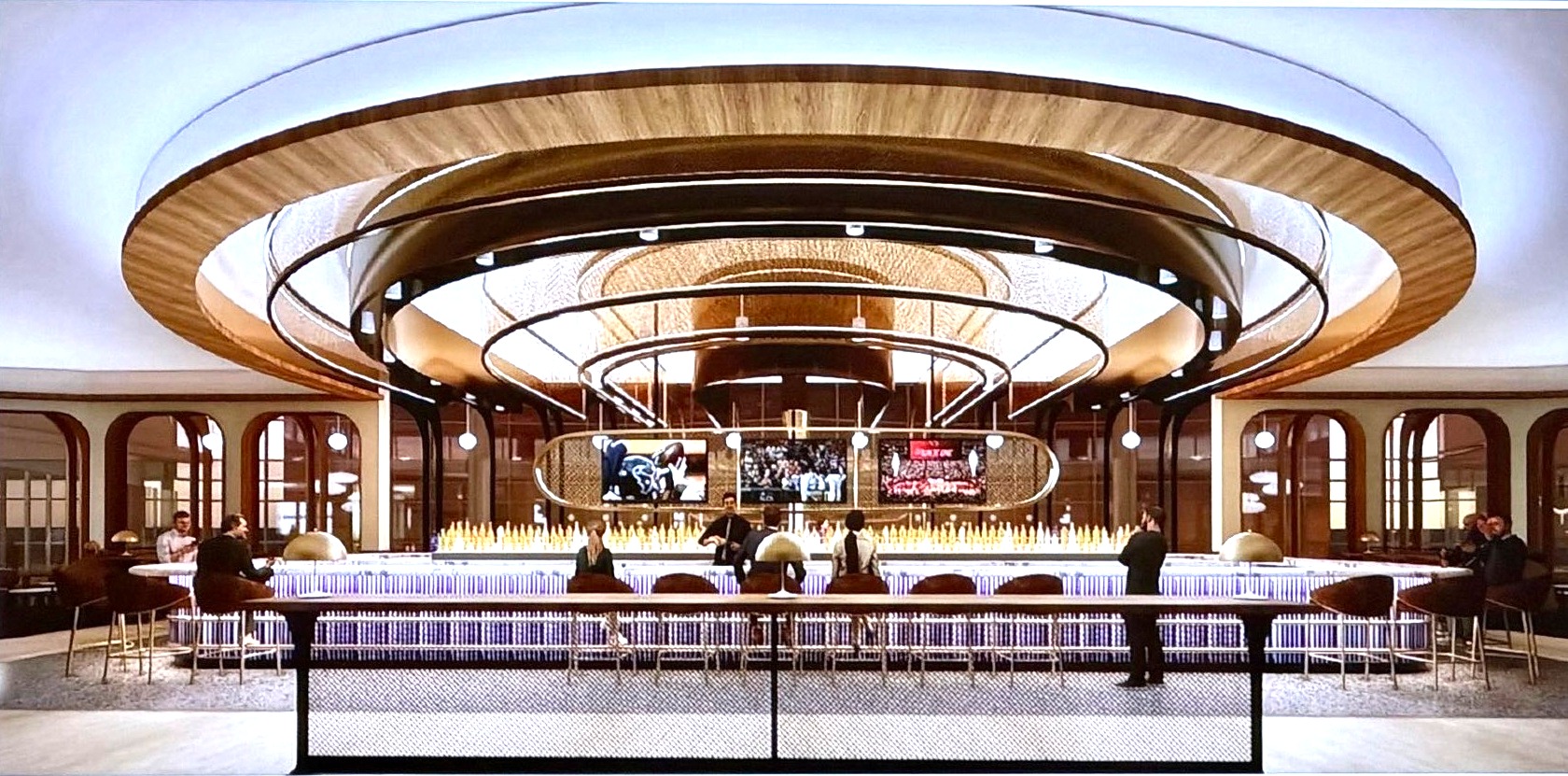
Aviation watchdog JonNYC shared an internal United Airlines presentation about new lounges at Houston Intercontinental and Washington Dulles airports and how it’s investing in its different hubs.
pic.twitter.com/ywDxXJDRWS
Índice
— JonNYC (@xJonNYC) April 1, 2026
United, I think, would frame this as its future edge coming from making the physical plant at its hubs match the network and fleet it wants to run. The lounge renderings are a big part of that, but it’s gates, baggage systems, rail access, and higher-gauge flying.
Preparing For A Return To New York JFK
They’re expecting to get back into New York JFK through their JetBlue partnership which initially gives them access to seven takeoff and seven landing slots a day starting in 2027. So they’re working now to prepare for this, “looking at gates, lounge and maintenance facilities.”
Disgraced former United CEO Jeff Smisek walked away from JFK because he thought those flights lost money, but he didn’t understand how it would cost United business on the West Coast and with corporate contracts, because those customers didn’t want to fly to Newark. And it cost them significantly with their co-brand credit card performance, because it shed cardmember spend on one side of the river.
United Is Building Two Of The World’s Largest Lounges
United will open its largest club – at 55,000 square feet – in Houston.
Houston Intercontinental sees a 40-gate Terminal B program a 765,000-square-foot North Concourse with 22 narrowbody-equivalent gates, a South Concourse conversion from 30 old 50-seat-regional gates to 18 E175 gates, expanded ticketing/security/baggage, and this United Club.
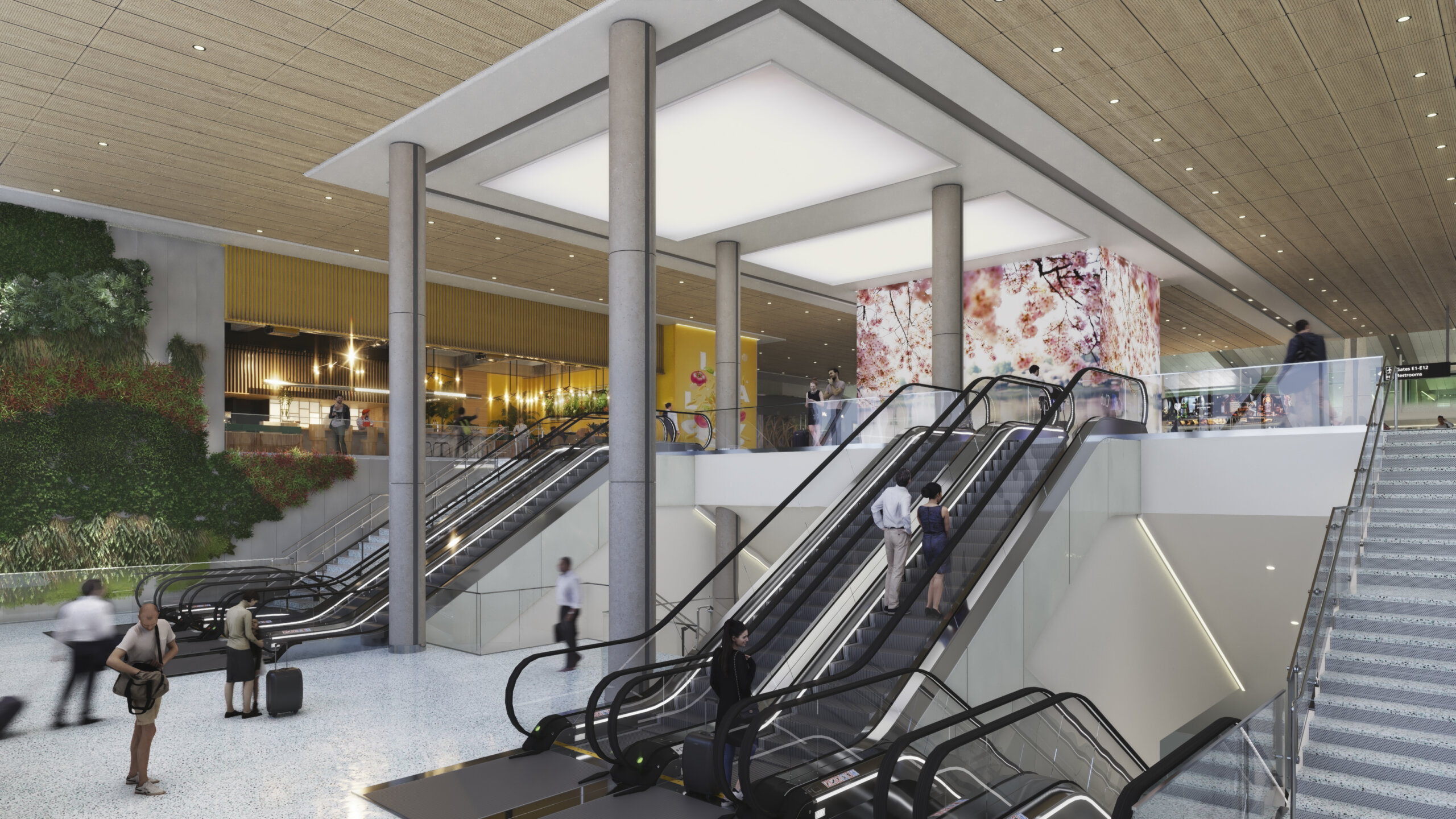
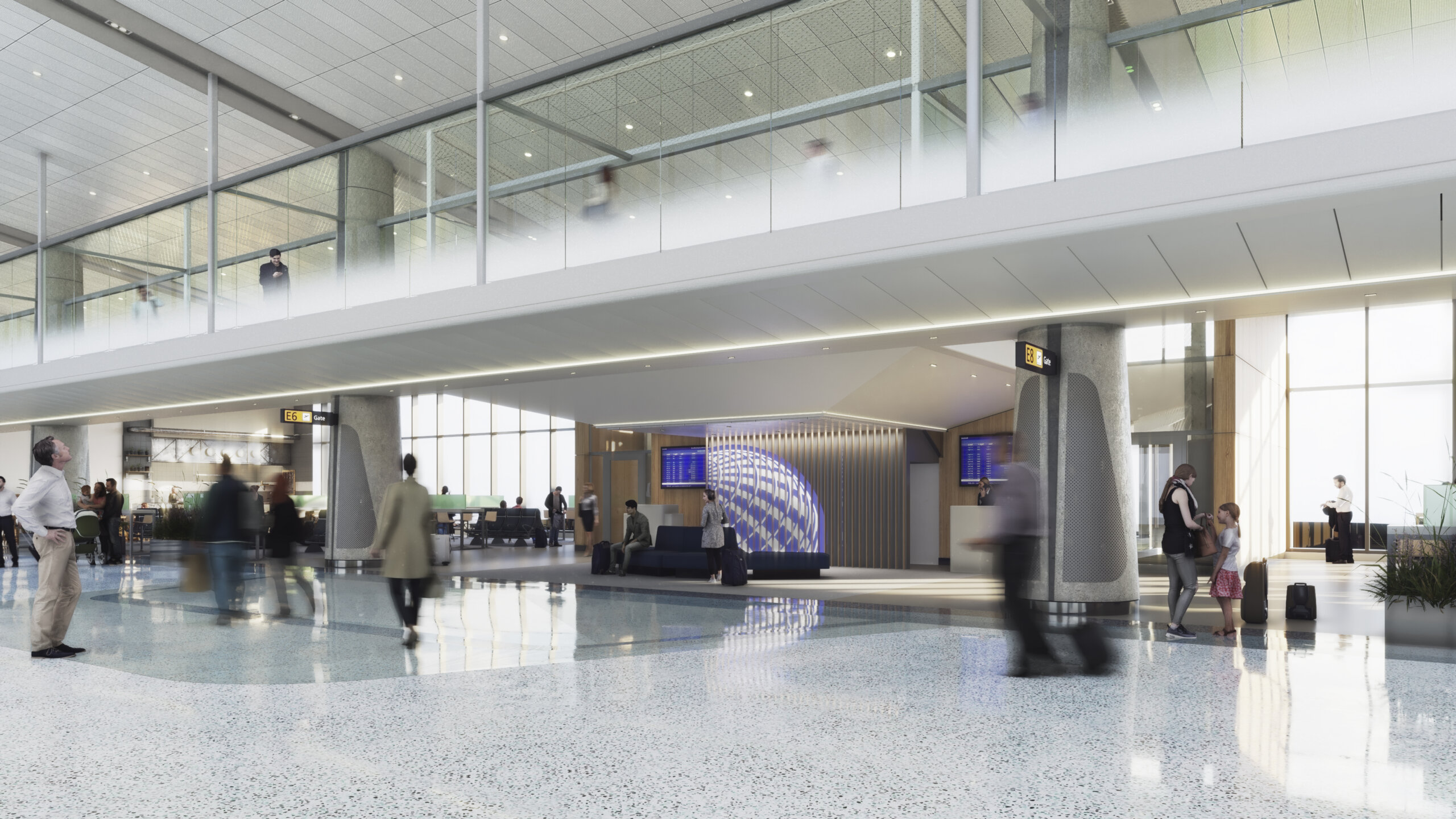
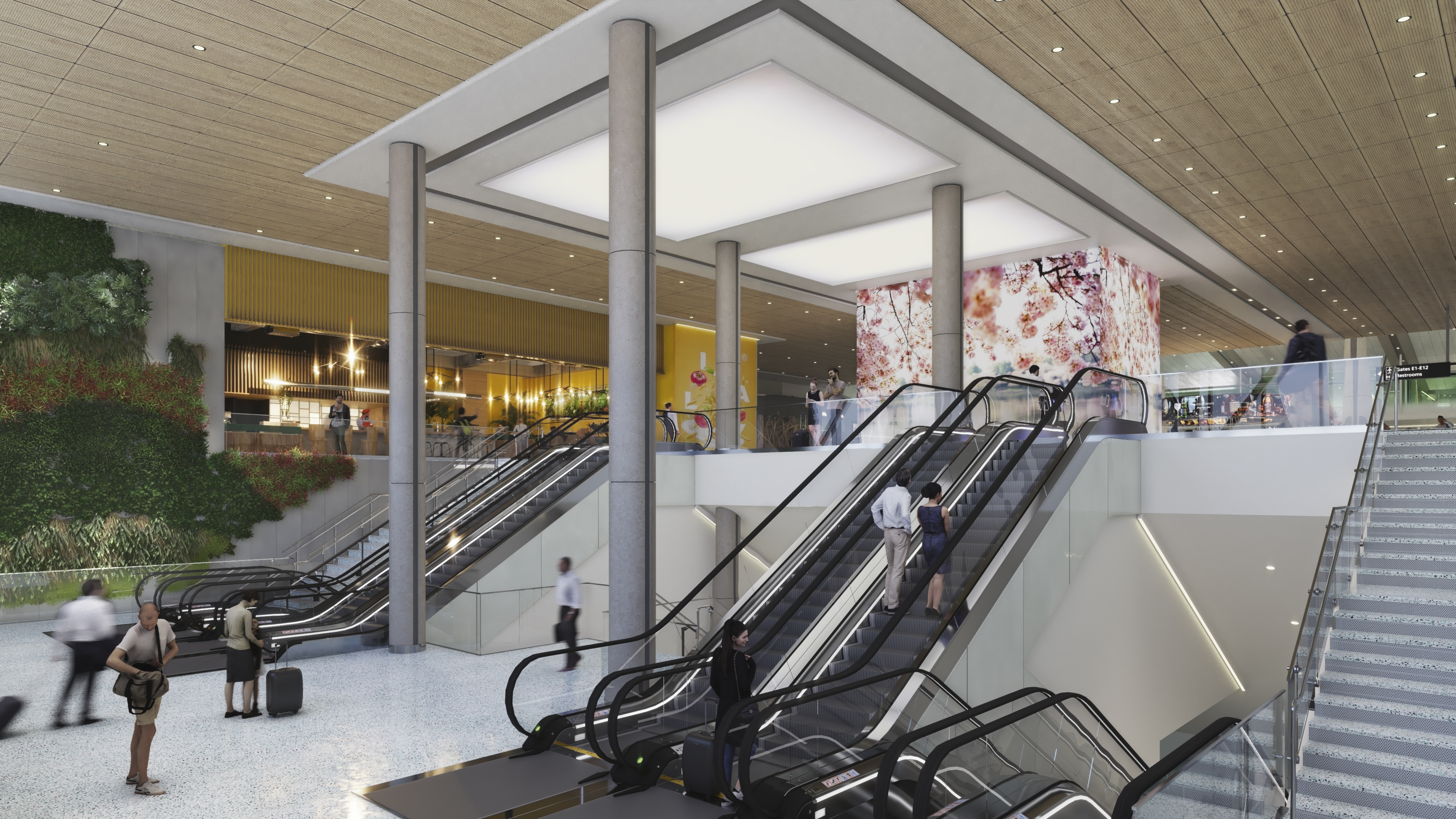
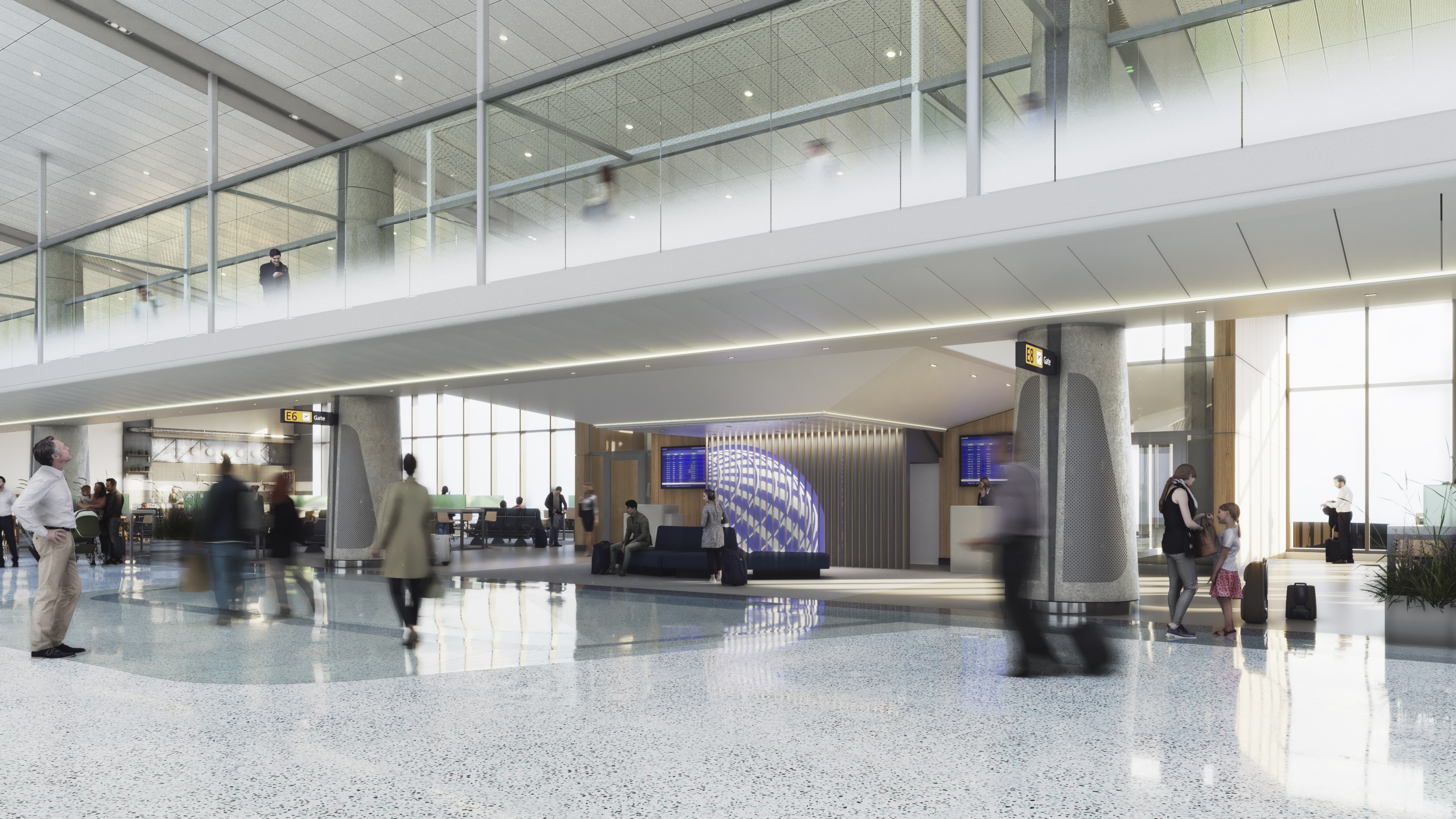
And they will occupy the new Washington Dulles 14-gate E concourse that opens this fall. It’ll feature a 40,000-square foot United Club (that JonNYC says will have 650 seats), and it’s above the airport train rather than a long walk from it like the 45-year old temporary C/D concourse United also operates from.
Credit: Metropolitan Washington Airports Authority
Credit: Metropolitan Washington Airports Authority
At the time the United Club for the Washington Dulles E Concourse was announced about a year and a half ago, it was supposed to be the largest United Club. Houston’s will be about 40% larger than that!
And I believe these will become the seventh and ninth largest airport lounges in the world, although some of this depends on how you split up or draw a circle around a given lounge (for instance the Singapore Airlines Changi terminal 3 premium lounge complex is about 65,000 square feet but I don’t count it because it’s made up of several different lounges with different access rules).
Feel free to correct me on this, nonetheless. What lounges am I missing?
- Emirates Business Class Lounge, Dubai (DXB) Concourse A is approximately 177,960 sq ft
- Emirates First Class Lounge, Dubai (DXB) Concourse A approximately 133,774 sq ft
- Qatar Airways Al Mourjan Business Lounge, Doha (DOH) 107,639 sq ft
- Qatar Airways Al Mourjan Business Lounge – The Garden, Doha (DOH) 79,545 sq ft
- Turkish Airlines Lounge Business, Istanbul (IST) 60,278 sq ft
- Turkish Airlines Miles&Smiles Lounge, Istanbul (IST) 60,278 sq ft
- United Airlines New Houston Club (IHA) 55,000 sq ft (forthcoming)
- LATAM Lounge, Santiago (SCL) 43,056 sq ft
- United Airlines Washington Dulles Concourse E Club (IAD) 40,000 sq ft
- Delta One Lounge, New York JFK (JFK) 39,707 sq ft.
Etihad’s Abu Dhabi business class lounge is clearly somewhere on this list, but I don’t know the actual square footage.
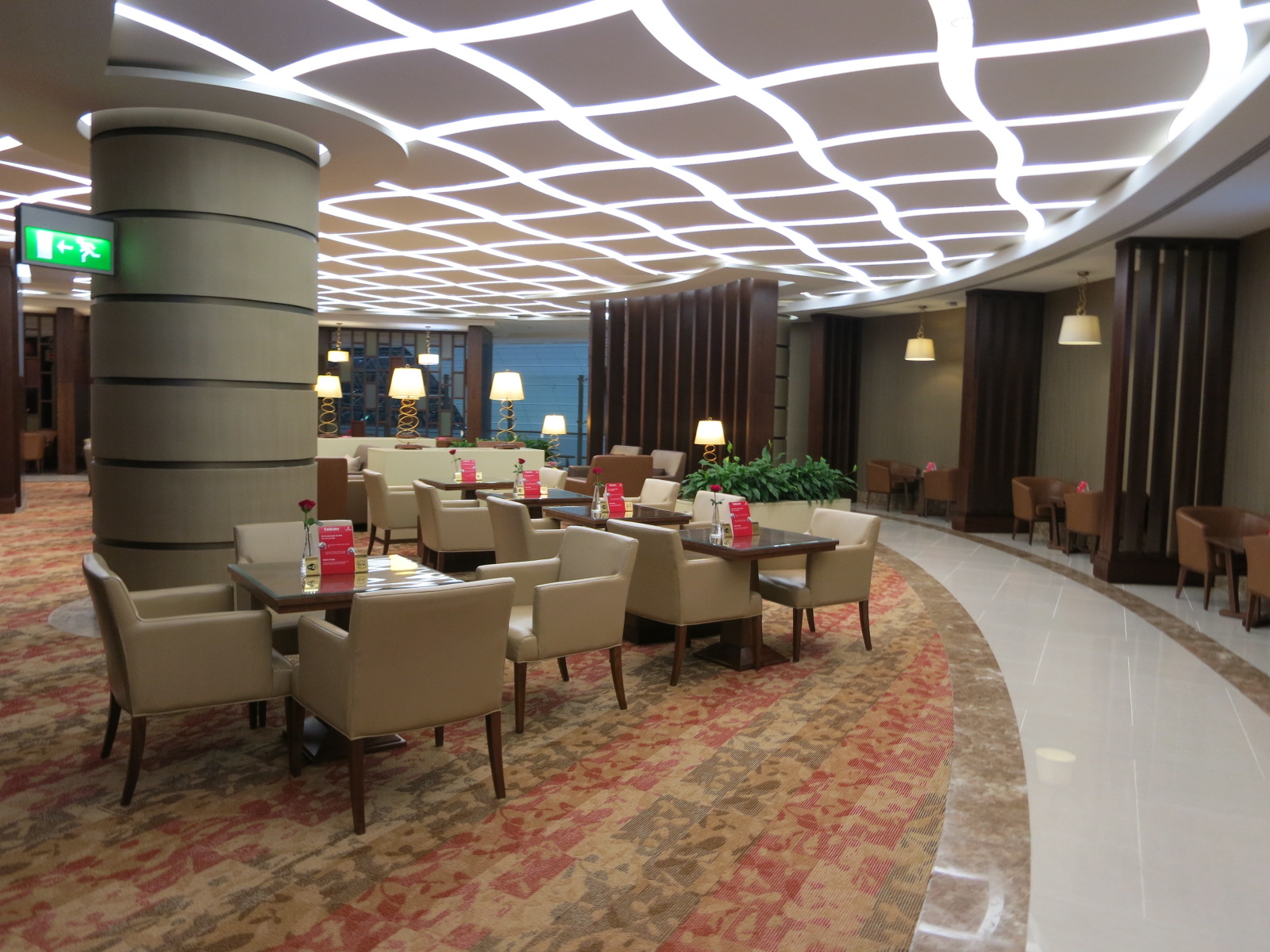
The Emirates Dubai Concourse A first and business-class lounges are two different levels of the same space and are a combined incredible 312,153 sq ft. The first class lounge is surreal because there are often more buffets and restaurants than there are passengers at a given time.
I’ve called it the Night of the Comet lounge because it’s as though a neutron bomb went off, all of the people disappeared, but the infrastructure of the entire world remained.
Still, United’s new lounges in Houston and at Washington Dulles will be very large – larger than their refreshed Denver lounges which are physically spectacular. They’ll be a huge upgrade for airports that haven’t seen a lot of love in a long time.
United’s Hub Strategy
JonNYC passes along,
United Airlines is undertaking an ambitious, long-term transformation of its airport infrastructure, positioning itself for sustained global growth. The strategy combines large-scale capital investment, forward-looking planning, and a strong focus on customer experience.
Washington Dulles emerges as a particularly strategic hub with significant untapped potential, while Houston and Chicago anchor major expansion efforts. Across its network, United is reinforcing its competitiveness through modernization, increased capacity, and enhanced passenger services.
Despite a challenging global environment, the company remains committed to accelerating investments, reflecting confidence in long-term demand and its strategic vision to become the world’s leading airline.
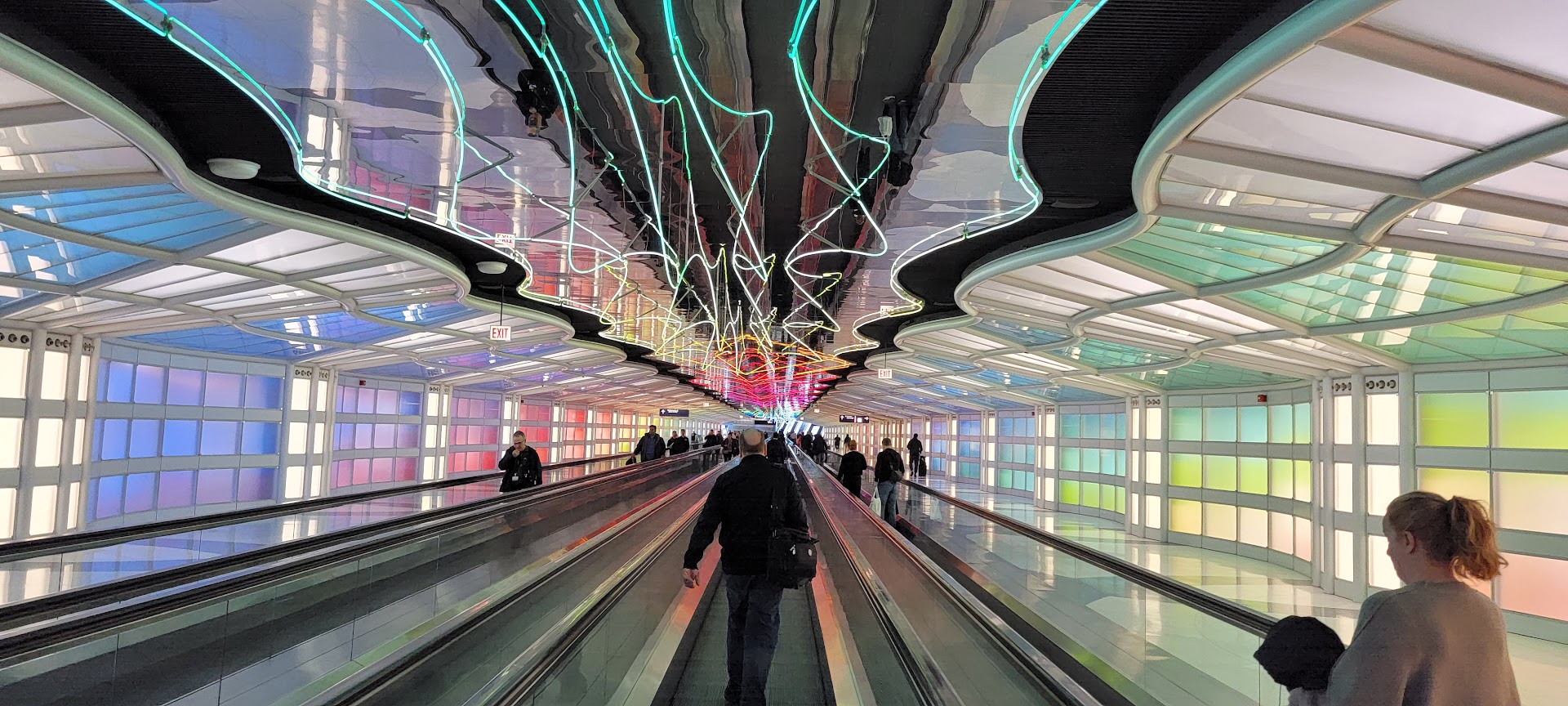
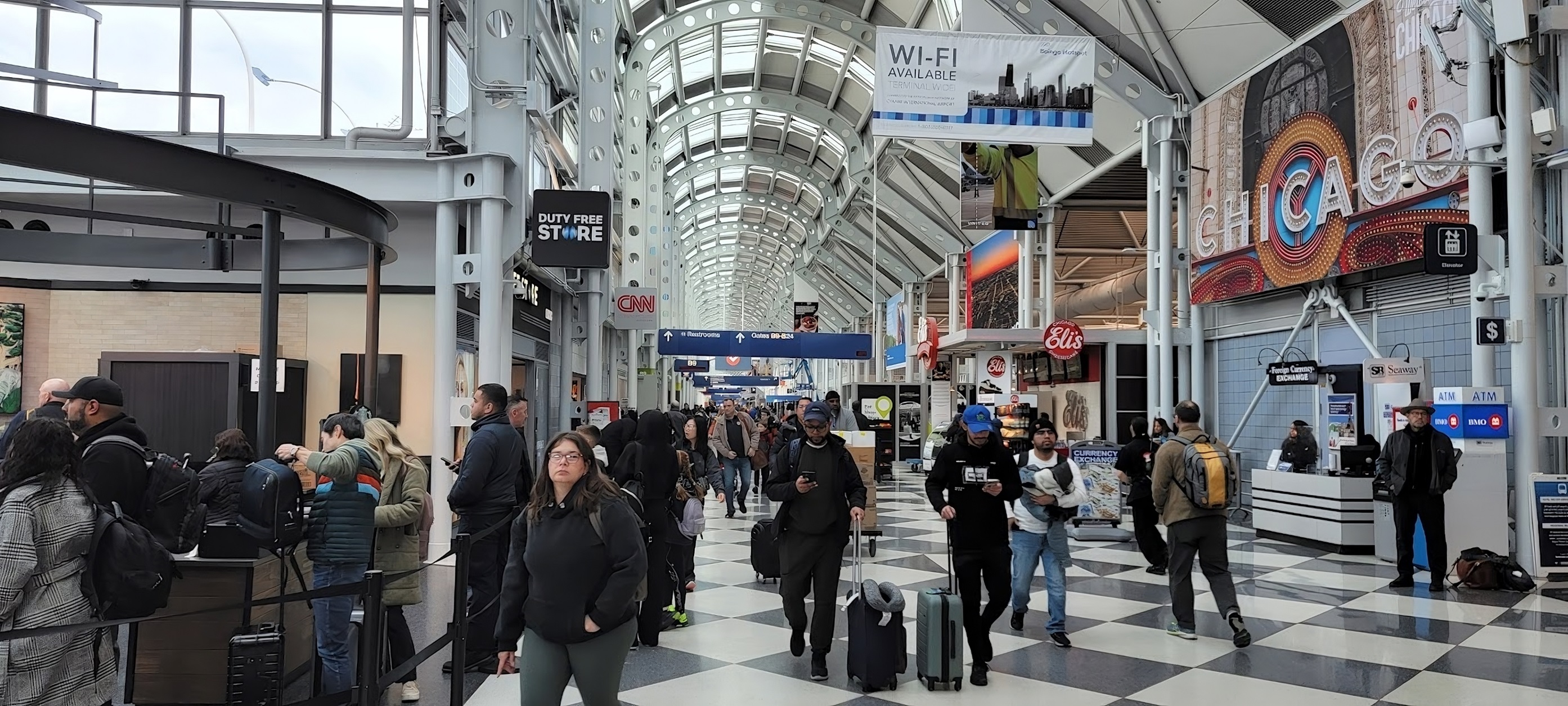
Chicago O’Hare’s new concourse will open in 2028 with 22 gates, eventually leading to demolition of terminal 2 and the building of the new Global Terminal.
It’s interesting to see the FAA limiting Chicago O’Hare traffic this summer, though, putting United’s growth plans that they really didn’t want to undertake on ice – United was adding a slew of short regional jet flights in order to run up departure numbers and secure more gates at American’s expense.
But the question remains, if O’Hare can’t handle more flights than it did in 2025, what are they building all these new gates for?
San Francisco is another similar question, because the FAA is limiting parallel landing operations which will reduce capacity at the airport, but they’re undertaking modernization of Terminal 3 expected to be completed next year. (This will mean new lounge space including probably a Chase or Capital One lounge as well.
United Next is about aligning network and product with the potential of its hubs, which it often describes as ‘the best in the industry’ – United doesn’t generally dominate most of its hubs the way some other carriers do, but they’re placed in more important cities with bigger markets and bigger spend. So these are competitive places, where United is well-positioned, but where they have to be better.
The airline recently reported that fourth-quarter customer satisfaction was the highest in its history, with a seven-point improvement in check-in experience (lobby, kiosk, and app investments). That makes capital investment part of the core business and loyalty model.
More From View from the Wing
[ad_2]
Link da fonte