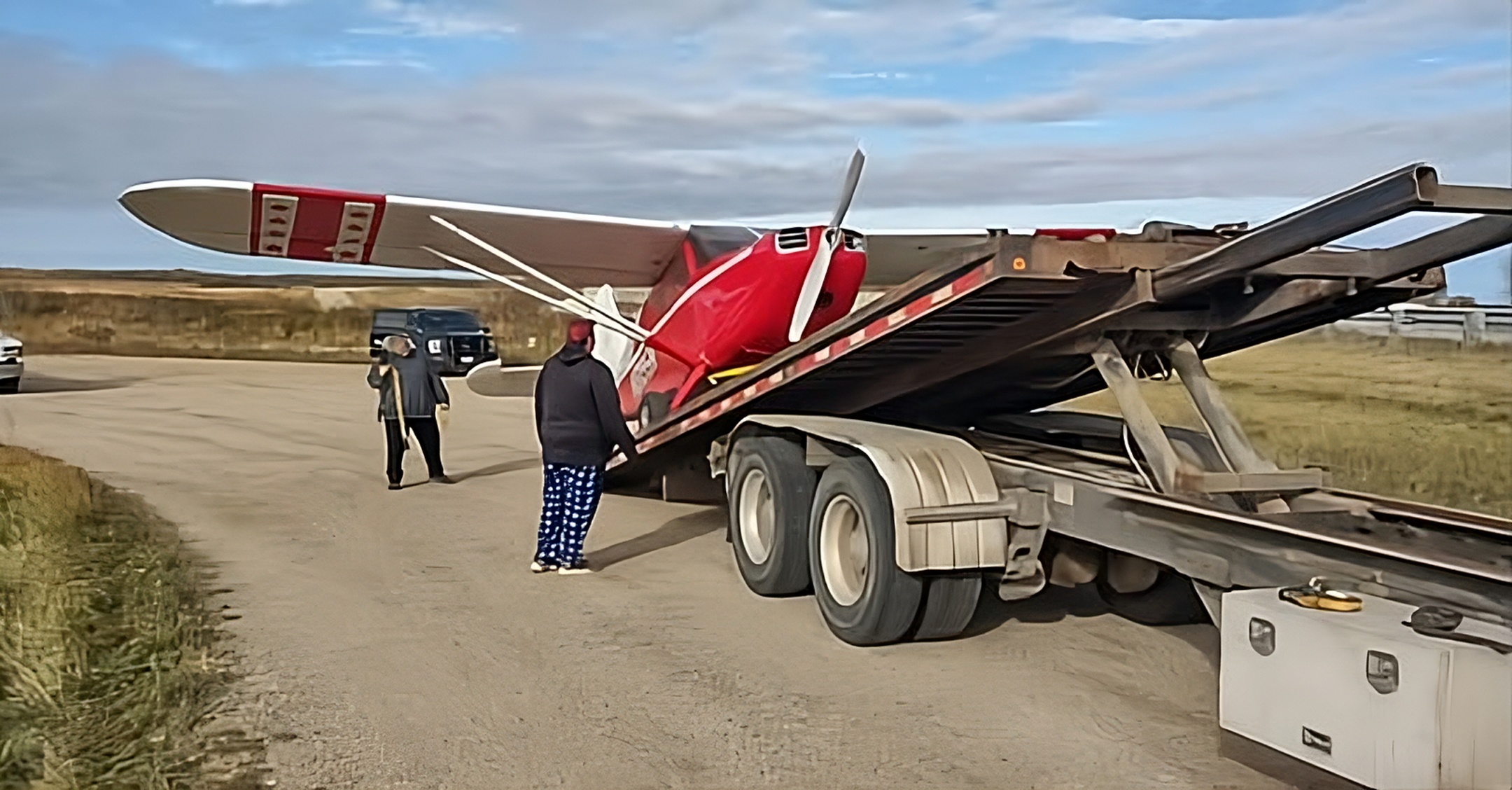
A private pilot’s Stinson 108 engine seized on October 15, 2025 and he executed an emergency landing on Minnesota State Highway 89 as it crosses the Red Lake Reservation. He had to choose between a lake, swamp, or road and this was by far the safest option.
Red Lake tribal police responded… and seized the aircraft, citing him for flying below 20,000 feet over Red Lake Nation. They have impounded the plane. They aren’t giving it back, because of a Tribal Council Resolution from 1978 oppositing low altitude military training flights, complaining about impacts on residents and wildlife, and banning air travel in the skies above the reservation. They claim:
- the aircraft landed without required authorization
- the landing created safety, liability, and resource protection concerns, and
- law enforcement acted to ensure safety/ and enforce tribal law.
This was a genuine emergency. Red Lake Nation is on shaky ground – at best – asserting jurisdiction over its airspace. That is subject to exclusive federal authority. And a state highway crossing tribal land remains a public right of way. Use of the highway in an emergency was lawful.
Clearly, seizing aircraft that make otherwise-legal emergency landings creates a bad incentive to avoid the safest option.
The air ban below 20,000 feet is simply illegal, but in practice that doesn’t matter.
- The federal government has exclusive sovereignty over U.S. airspace
- Citizens have a public right of transit through navigable airspace, which includes airspace needed for takeoff and landing.
- There’s a legal path to protect airspace, which is FAA-designation. That wasn’t followed here. And federal law preempts.
- Requiring pre-arrvial permission for an engine-out emergency landing is incompatible with reality and part 91 regulation.
- The tribe lacks jurisdiction over a state highway right of way going through a reservation, and tribes generally lack authority over nonmembers on nonmember land inside reservations.
The tribe would argue a safety and welfare exception to allow them to regulate activity on the highway, but an emergency landing on a state right of way cuts in the exact opposite direction. And they have no authority over the airspace in any case.
Here’s the problem. Red Lake has its own tribal courts. And they have some jurisdiction for public safety and potential violations here. The tribe can respond to the incident, secure the scene and investigate. But they clearly cannot seize the aircraft. However, you generally have to exhaust tribal court remedies before making it to federal court. So the tribe gets to litigate on its home turf, protecting tribal authority. This could go on for years before reaching a neutral court.
So what the tribe did was illegal, but it doesn’t matter, because the cost and time involved in challenging them is so prohibitive. The tribe doesn’t get to control the sky. It can investigate an incident but not punish the landing. Vindicating those rights, though, is nearly impossible. So the best path is a political one, and the aircraft owner, supported by the Aircraft Owners and Pilots Association, is seeking assistance of the Department of Transportation rather than the courts.