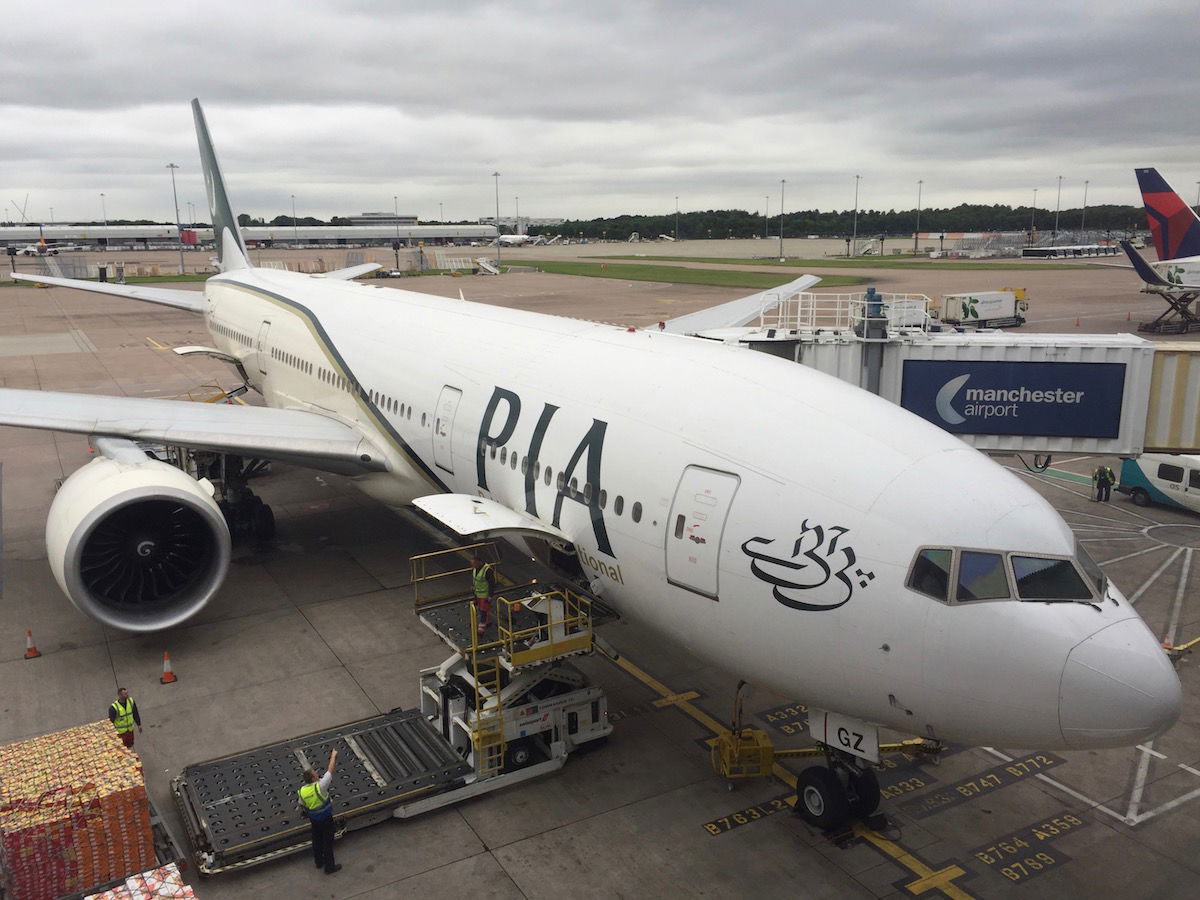
For years, Pakistan’s government has been trying to privatize its struggling national airline, Pakistan International Airlines (PIA). The latest such bid was launched in April 2025, which came shortly after the company reported its first “profit” in decades, and also managed to shed most of its legacy debt issues.
Still, it seemed like a long shot than any private company would actually want to invest in PIA. So there’s now an update, as a Pakistani consortium has acquired a majority stake in the company, as reported by Arab News. Let’s start with a little background, and then we’ll talk about the latest update…
Pakistan has been trying to privatize its national airline
Over the past several months, the Pakistani government has been seeking investors to acquire anywhere from a 51% to 100% stake in PIA. Pakistan has secured a $7 billion International Monetary Fund (IMF) bailout, and a condition of that is the country needing to be more fiscally disciplined.
As a result, the government set up a committee to privatize various government assets, with PIA being among those. During previous efforts to privatize PIA in 2024, the best offer was a $36 million investment for a 60% stake in the airline, which the government wasn’t willing to accept.
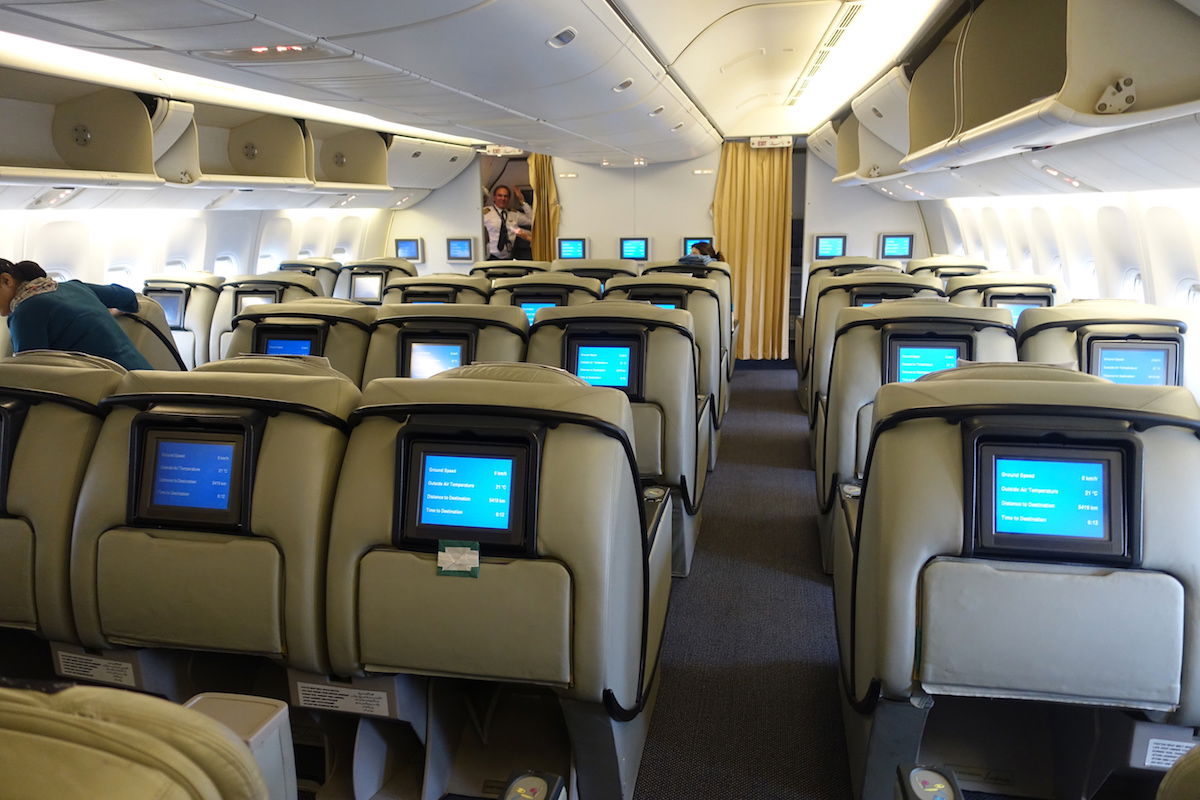
The issue is that over the past couple of decades, PIA has been an absolute mess of an airline, racking up an unbelievable amount of losses. From 2020 to early 2025, the airline was even banned from the European Union, after it was discovered that many PIA pilots held fake credentials. Even beyond that, the airline has lacked financial discipline, with bloated employee numbers, an outdated and inefficient fleet, and an uncompetitive onboard product.
Fortunately since last year, things have been looking up, ever-so-slightly. In 2024, PIA turned its first annual profit in two decades. One can’t help but be a little skeptical of the math being used there, though if it’s true, that shows some significant improvement. Another thing that perhaps made a privatization more appealing is that the government took over nearly all of the company’s $3 billion in debt, so that any potential bidder wouldn’t be on the hook for that.
Consortium takes 75% stake in PIA for $482 million
On Tuesday, December 23, 2025, PIA concluded its privatization, in a pretty impressive way. A consortium led by Arif Habib Group secured a 75% stake in the airline for $482 million, valuing the airline at $643 million. Even under new ownership, the company’s name will remain unchanged.
Under the agreement, the new management is required to invest up to $446 million in the airline, including acquiring new aircraft. One of the conditions of the deal is that no employees will be laid off for at least a year, and all existing pay, perks, and compensation structures, will remain unchanged. Arif Habib Group has 90 days to decide if it wants to purchase the remaining 25% stake in the airline, or is happy having the government retain that.
Following the announcement, Muhammad Ali, chairman of the Pakistan Privatization Commission, had the following to say:
“It will have new planes and all Pakistanis, who want to travel around the world directly, which we go through transits via different airports today, all of that will be improved, service quality will be better and overall, there will be an impact on employment and GDP growth in the country.”
“[We] had to make it at least Rs120-125 billion [investment]. That is why I am very happy to have Rs135 billion [$482 million] bid, out of which 92 percent will go to the company [PIA]. So, around Rs125 billion [$446 million] investment will be made in the company. So, what our target was for the investment, planes, today there are 18 planes, after 4 years, we are looking at 38-40 planes.”
Arif Habib, chairman of Arif Habib Group, shared his vision for bringing the carrier back to its glory days:
“PIA is our national organization. It has seen good days in the past. I hope that this new capital will go into the company and the airline’s problems will be solved. In the first phase, there will be 38 aircraft and then it will be expanded to 65 aircraft. Depending upon the demand, we will further increase the number of aircraft.”
It’s going to be interesting to see how this plays out. Pakistan is a fairly large country (with over 230 million residents), and there’s quite a bit of demand for air travel to and from Pakistan. There’s significant foreign investment in the country, and on top of that, Pakistan exports a huge number of workers to other countries.
However, the national carrier has historically just been so poorly run, and it almost seems like they’d be better off starting from scratch, rather than trying to fix the carrier in its current state.
I do find it interesting that the company investing in PIA isn’t otherwise in the airline business. You would’ve thought that there would be upside here for one of the Gulf carriers to invest in PIA, given the importance of connectivity within the region, and the potential benefits there (like more air rights to Pakistan).
Then again, I suspect they realized just how big of a task this would’ve been, and ultimately weren’t interested. For that matter, perhaps they didn’t want to do anything that would potentially cause issues with the Indian government, restricting air rights there.
Bottom line
Pakistan’s government has successfully privatized struggling national carrier Pakistan International Airlines (PIA). A Pakistani consortium is acquiring a 75% stake in the airline for $482 million, which is honestly a great outcome for the government.
The new owners are promising to expand PIA and return it to its glory days, though they certainly have their work cut out for them. That’s especially true when you consider that a condition of the deal is that no employees can be laid off or have pay adjusted for a year.
How do you see this PIA privatization playing out?
Link da fonte