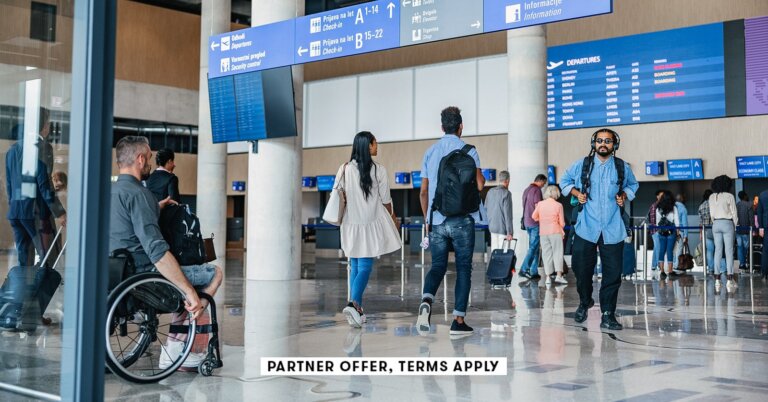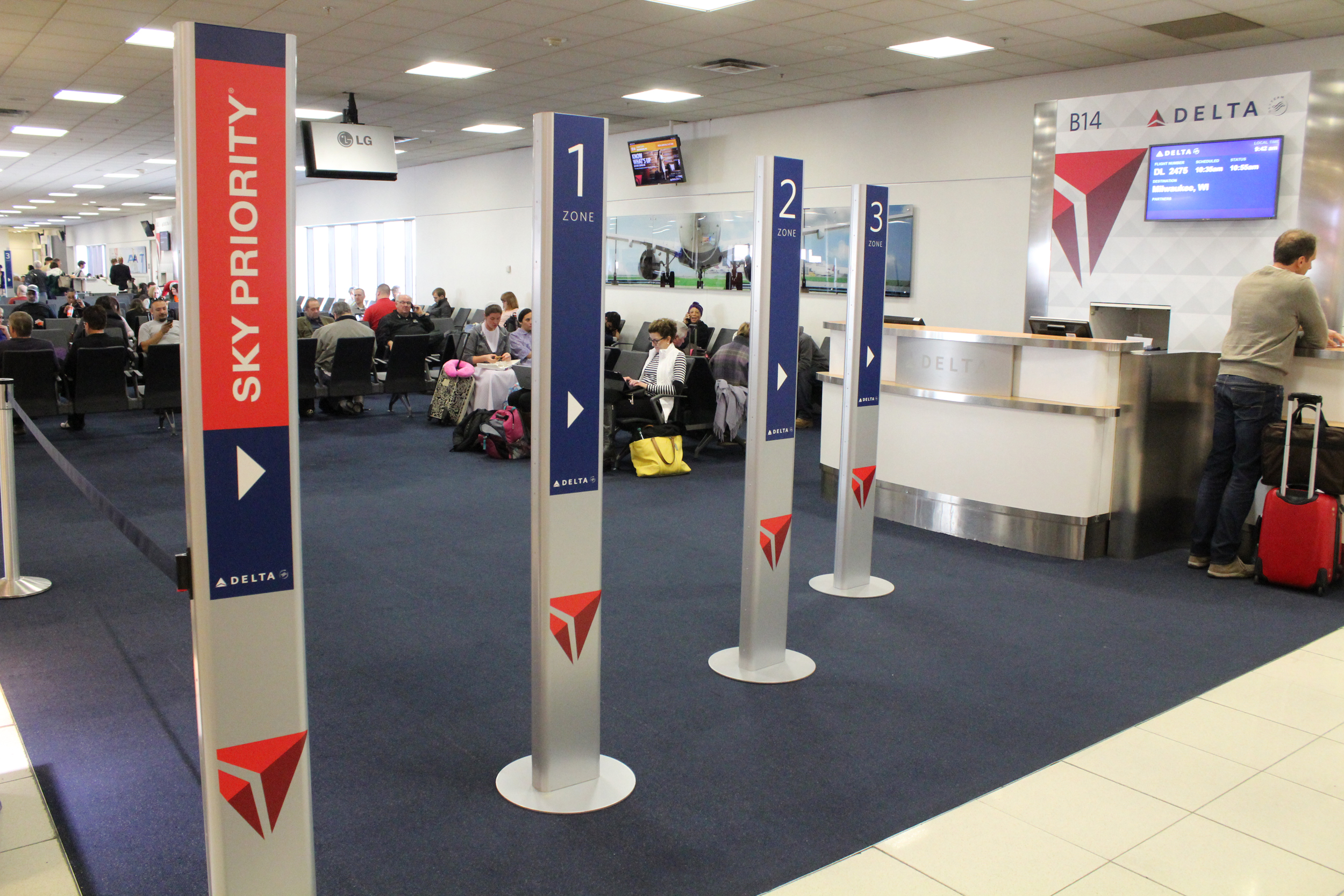
According to the Minneapolis airport, ICE agents will be “checking and verifying documents” for the next 3 weeks and that this will include patrolling jet bridges.
The Metropolitan Airports Commission says it doesn’t get advance notice of enfocement at the airport, and doesn’t coordinate with Immigration and Customs Enforcement, but that federal regulations give federal agents broad access to airport property. The agency refuses comment.
Bear in mind that:
- U.S. citizens aren’t required to show ID. Green card holders are required to carry their card.
- Citizens may still want to comply or else ICE might detain you improperly. Citizens in Minnesota have been violently detained by ICE. However, U.S. citizens have also been detained when ICE dismissed their IDs as fake.
- Minneapolis drivers licenses are available regardless of citizenship. Those with illegal presence can get one. That’s not a REAL ID, but you can still go through a security checkpoint without REAL ID.
Positioning on jet bridges is a post-security choke point where it’s easy to intercept someone right before boarding or immediately after deplaning. And the agency has broad authority within 100 miles of a border and most people live within 100 miles of the border. This is the ‘border exception’ where rights are said not to apply. Here, two U.S. citizens were arrested by a border officer for speaking Spanish at a convenience store in Montana.
ICE has expanded rapidly and has been badly managed for many years, creating a dangerous culture and one hostile to citizens and non-citizens alike.
- They have near-total authority. At ports of entry and within the 100-mile “border zone,” officers may search and question people without warrants or traditional Fourth Amendment thresholds.
- Immunity/no recourse. They have near-immunity from civil suits. In Egbert v. Boule (2022) the Supreme Court closed almost all Bivens-type damage claims against CBP agents, removing personal liability as a deterrent for bad behavior that exists for many other federal officers.
- CBP has a paramilitary, threat-hunting mindset. They wear uniforms, side arms, and go through drill-style briefings. Their chain-of-command ethos rewards compliance and toughness, not customer interaction.
- Expanded too quickly. Over the past two decades they’ve more than doubled their workforce, diluting requisite training and also leading to quality dilution of supervisors.
- Incentives matter. Performance metrics incentivize seizures, arrests and “hits.” Officers receive commendations, overtime and promotion points for enforcement statistics. There is no equivalent metric for traveler satisfaction.
- No discipline. There’s very little internal discipline. 97% of complaints end in “No Action Taken.” According to the Department of Homeland Security’s Office of Inspector General, 47% of CBP employees don’t think misconduct is punished at any level.
- Union protections. The National Treasury Employees Union, which represents the ~30,000 CBP Office of Field Operations employees (including CBP Officers), negotiates “last chance” and arbitration provisions that make removals for misconduct difficult – and given the litigation managers have to deal with they regualrly don’t bother.
- Power differential. Most people being inspected lack legal representation, time, or practical recourse. The power differential itself breeds an imperious dynamic unless an individual officer chooses otherwise.
- Personnel inclined to this behavior self-select into the role. CBP’s structure and recruiting pipeline create self-selection effects. Jobs that promise wide discretionary power, symbols of authority, generous overtime, early retirement, and a quasi-military identity tend to pull in applicants who are more disposed to hierarchy, control, and confrontation. Additionally, more than one-third of CBP’s workforce is ex-military.
Hayek’s chapter 10 in The Road to Serfdom (“Why The Worst Get On Top”) argues that in areas of centralized political decision-making, advancement hinges on wielding coercion, systematically rewarding the most ruthless, unscrupulous, and manipulative individuals, while crowding out those with stronger morals or respect for dissent. In short: concentrated power acts as a selection filter, so “the worst get on top.”
Stepped-up presence in Minneapolis feels responsive to anti-immigration enforcement activism in the area. It seems to punish local resistance.
TSA has its own problems, but at least their presence is aligned with an an aviation security goal. They check identity against government watch lists, and shouldn’t be distracted with checking for legal presence.
Having an additional checkpoint at gates has no legitimate connection to air travel, and in fact serves as a government discreationary layer over the right to travel. And make no mistake, there is a right to travel by air.
The right to move freely between states is a well-established principle in U.S. law affirmed by several Supreme Court cases under the Privileges and Immunities Clause and Commerce Clause.
- Crandall v. Nevada (1868) struck down a Nevada law imposing a tax on individuals leaving the state because states couldn’t restrict citizen movement across state lines.
- United States v. Guest (1966) held that there is a Constitutional right to travel from state to state.
- Shapiro v. Thompson (1969) held that states could not impose residency requirements to restrict welfare benefits. The Court found that the right to travel includes the right to migrate to another state and receive equal treatment as a resident.
- Saenz v. Roe (1999) struck down a California law that limited welfare benefits for new residents. The Court delineated three components of the right to travel: The right to enter and leave another state; the right to be treated as a welcome visitor rather than a hostile outsider; the right to become a resident of any state and enjoy the same privileges and immunities as other residents.
Traveling between distant domestic points, and between domestic points including the mainland and U.S. territories, without air travel is impractical and burdening the right to travel makes it difficult, inadvisable, or uncomfortable to exercise the right. There may still be balancing of the right against other government interests, but it’s a right nonetheless.
More From View from the Wing
Link da fonte