Delta Air Lines has today reported its 2025 financial results, and 2026 forecast, and there’s nothing too surprising. While the airline expected to achieve record profits in 2025, that didn’t turn out to be the case, due to all the economic uncertainty.
Delta is now expecting to earn record profits in 2026 — I understand Delta has to provide guidance, but it just seems that we’re continuing to see a lot of uncertainty, so who knows how things will play out. Anyway, in this post I’d like to focus on the detail of Delta’s 2025 results (particularly in Q4) that I found most interesting.
Delta premium revenue jumps 9%, economy revenue drops 7%
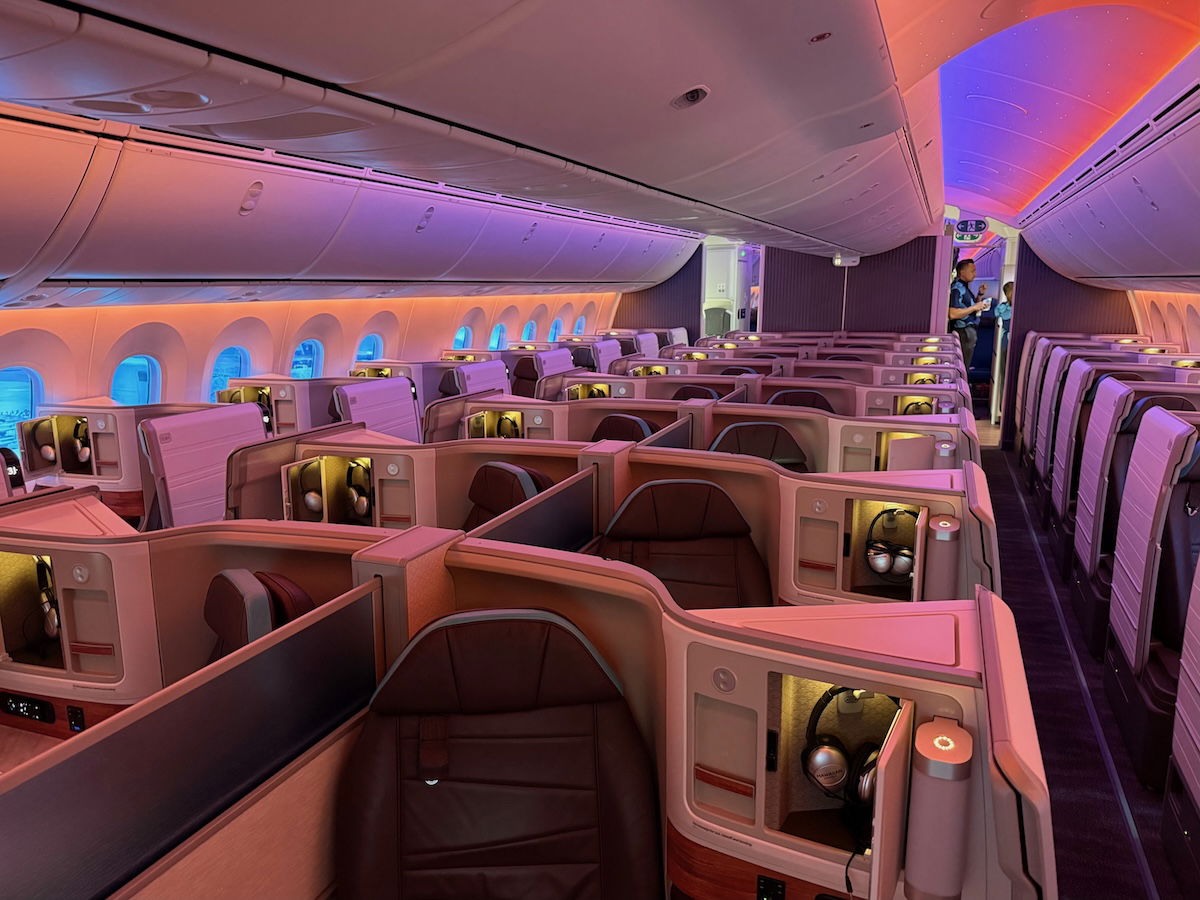
Coming out of the pandemic, “premium” travel has been all the rage, and that’s a trend that’s continuing, seemingly with no end in sight. Just listen to any airline earnings call, and you’ll hear premium, premium, premium, premium, premium. Airlines are doing well in their forward cabins, while they’re struggling more in economy.
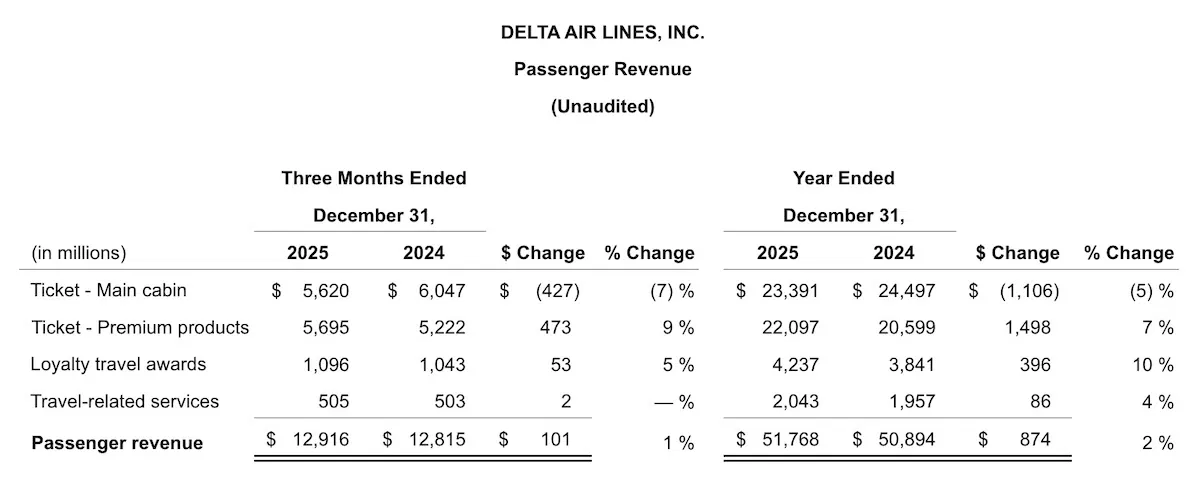
There’s no better reflection of this than Delta’s latest passenger revenue numbers. Before I share those details, let me just define a couple of things:
- Main cabin revenue includes standard economy bookings, including basic economy
- Premium product revenue includes first class, business class, premium economy, and extra legroom economy
With that in mind, if you compare Delta’s Q4 2025 results to Q4 2024 results:
- Main cabin revenue decreased by 7%, from $6.05 billion to $5.62 billion
- Premium cabin revenue increased by 9%, from $5.22 billion to $5.70 billion
As you can see, that means premium cabin revenue exceeded main cabin revenue, which is the first time in the company’s history that we’ve seen that. Looking at the full year, and comparing 2025 to 2024:
- Main cabin revenue decreased by 5%, from $24.50 billion to $23.39 billion
- Premium cabin revenue increased by 7%, from $20.60 billion to $22.10 billion
So for the full year, main cabin revenue exceeded premium revenue. However, it seems there’s no end in sight to this shift, and I wouldn’t be surprised if 2026 is the first full year where premium cabin revenue exceeds main cabin revenue.
Will aircraft LOPAs change more radically over time?
People disagree as to whether the move toward premium travel is a temporary fad, or a permanent shift. If you ask airline executives, they believe it’s the latter.
I suspect they’re largely correct, given the extent to which airline profits in the United States have also increasingly centered around loyalty programs, and premium cabins are a big part of that.
However, I don’t think it’s quite as much of a given as they assume, because I think it largely reflects the increasing dual economy we see in the United States — you have a lot of people struggling with the increased cost of living, while you have others getting rich off the strong stock market, which would make you believe that everyone is thriving. If we see a big drop in the stock market, you can say goodbye to the level of premium demand we’re seeing.
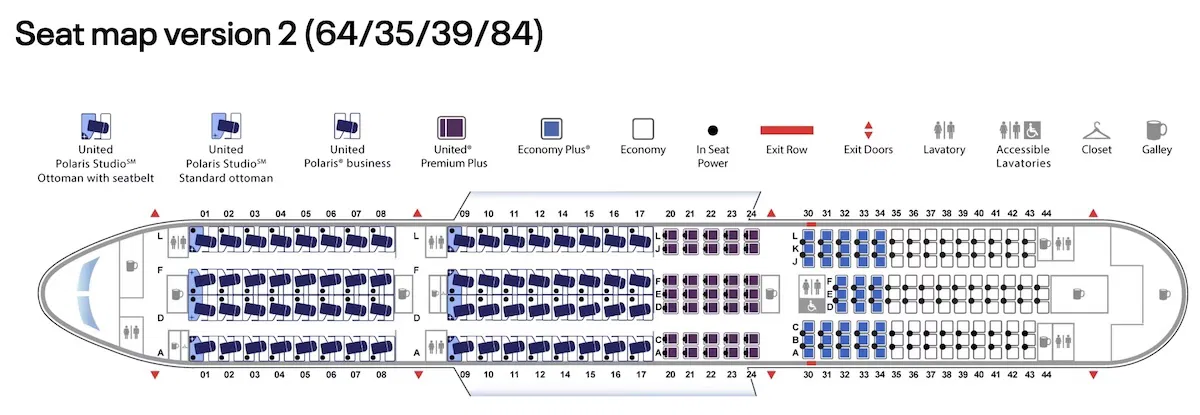
What I find most interesting, though, is how LOPAs are evolving (“LOPA” stands for “layout of passenger accommodations” — essentially how planes are configured). When you look at wide body, long haul aircraft, airlines are clearly going all-in on premium. I mean, just look at the seat map for United’s upcoming Boeing 787-9s (American and Delta are also making their wide body planes more premium, but not quite to this extent).
The planes will feature a total of 222 seats, and 138 of those seats will be premium. Around 80% of the cabin is dedicated to premium seating, so you better hope that premium revenue exceeds economy revenue!
But what I find interesting is that you don’t see nearly this level of transformation on domestic aircraft. The percentage of first class seats remains largely unchanged compared to 20 years ago, even as we’ve gone from seeing 10% of first class seats sold, to seeing 90% of first class seats sold.
For example, just look at Delta’s old Boeing 757-200s, compared to Delta’s new Airbus A321neos:
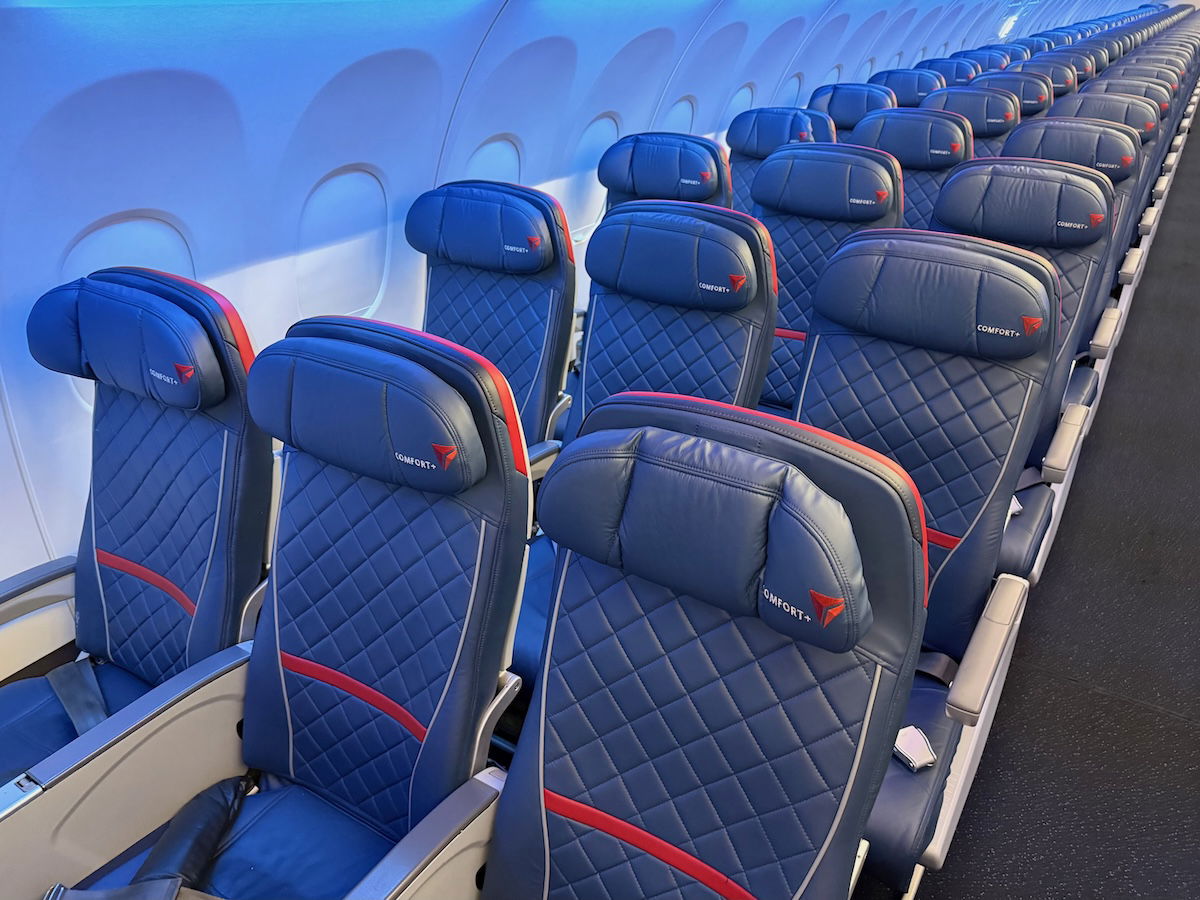
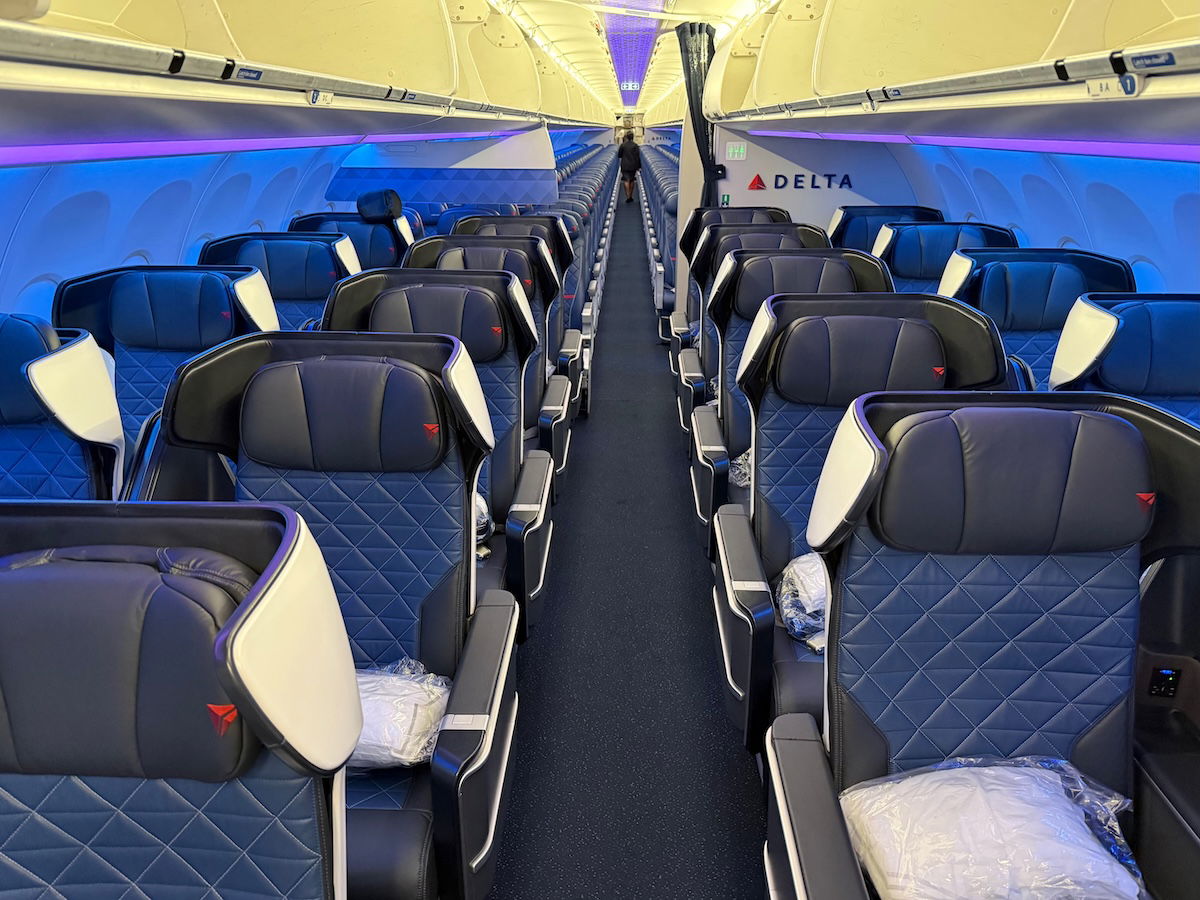
- Airbus A321neos have 194 seats, including 20 first class seats, 60 extra legroom economy seats, and 114 economy seats
- Boeing 757-200s have 199 seats, including 20 first class seats, 29 extra legroom economy seats, and 150 economy seats
So I guess if you want to look at it differently, you could largely attribute the increase in premium revenue on narrow body planes to more people simply buying up to extra legroom economy seating, given how many more of those seats there are, plus the new ways Delta has monetized those seats.
However, it still seems like US airlines don’t want to exceed that 20-seat first class cabin limit that largely exists on new generation aircraft. Several months back, Delta executives hinted that they were considering making first class cabins bigger, but nothing has come of that yet. I’ve written in the past about how I think US carriers should consider greatly expanding the size of their first class cabins, and I’m curious if that does eventually happen.
Bottom line
In Q4 2025, Delta reached an interesting milestone, where premium cabin revenue exceeded economy revenue for the first time. The trend is clear — premium travel demand keeps increasing, while economy travel demand (or at least the revenue associated with it) keeps decreasing.
Now, this might not be quite as radical as it sounds, as I imagine a large part of this is passengers increasingly paying for extra legroom economy seating, as those cabins continue to get bigger. However, I can’t help but think that we should also eventually see first class cabins get more than 20 seats.
What do you make of Delta’s premium cabin revenue milestone? Do you think we’ll eventually see bigger first class cabins?
Link da fonte