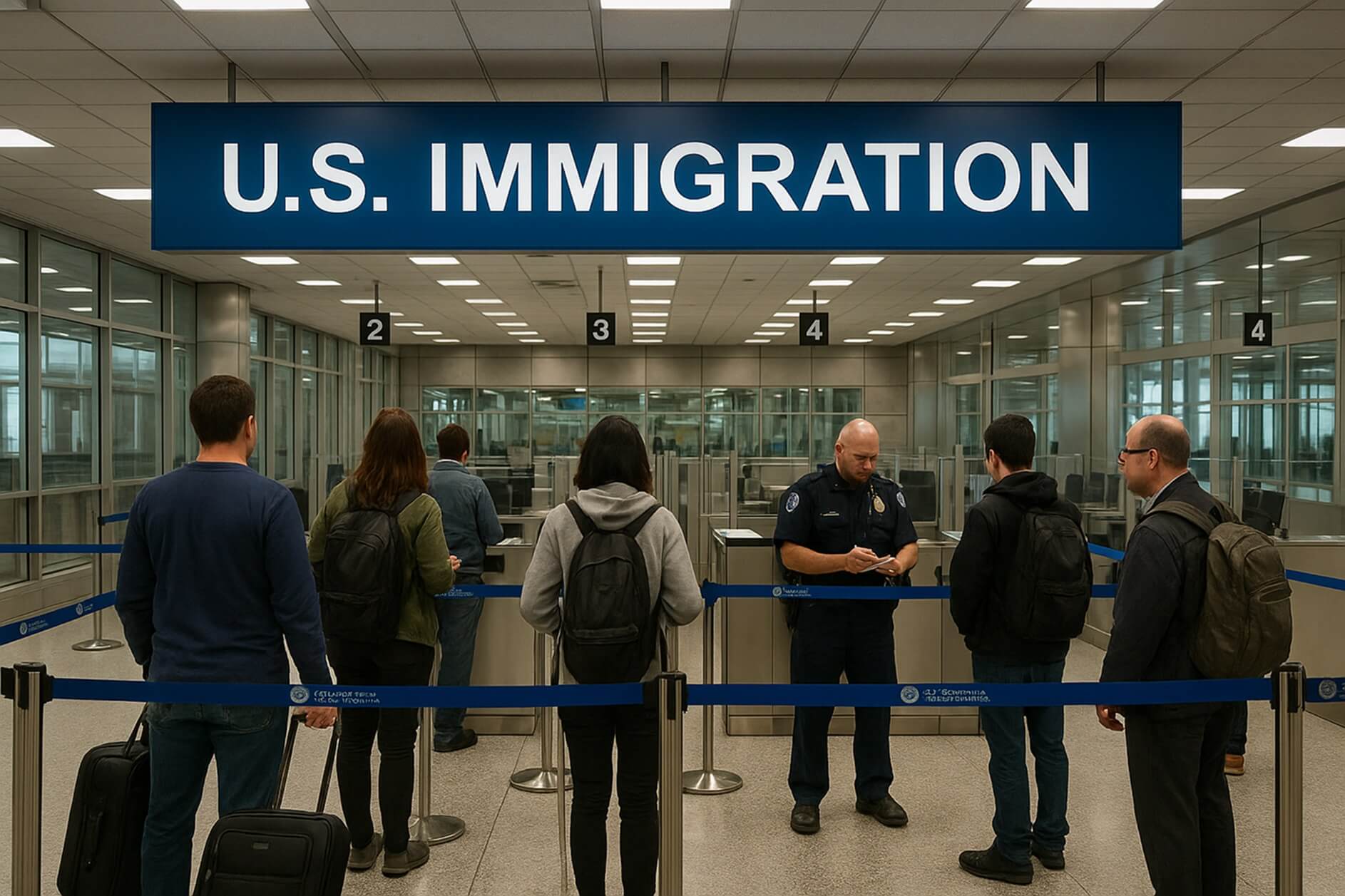

A Vermont schools superintendent is challenging policies that allow warrantless search and seizure of electronic devices such as phones and laptops at the border. A new lawsuit seeks to curtail these after rampant abuse.
Índice
CBP reportedly told the U.S. citizen he had “no fourth amendment rights” when returning to the country at Houston Intercontinental airport. He was detained for four hours, and pressured to hand over passwords and devices.
Wilmer Chavarria is a U.S. citizen who regularly visits family in Nicaragua.
On July 21, 2025, he says Customs and Border Protection detained him “for no given reason,” separated him from his husband, and took him into secondary.
- Agents repeatedly pressured him to surrender a laptop, smartphone, and tablet plus passwords.
- When he objected, he says agents told him he had “no Fourth Amendment rights at the border” and treated asserting rights as “suspicious.”
- He says requests to contact family and a lawyer were denied.
- He held out because he didn’t want the government poking through confidential student data on work devices. After “hours” of isolation and pressure, he says he gave in and turned over devices and passwords.
He says he expects it to happen again, so he’s been traveling without his laptop (and so unable to work).
CBP’s 2018 Directive: Suspicionless Searches Permitted
The complaint attacks CBP Directive 3340-049A (2018) which authorizes these searches:
- A “Basic Search” (manual review on the device) can be conducted “with or without suspicion” at the border.
- An “Advanced Search” (connecting external equipment to review/copy/analyze contents) is allowed with reasonable suspicion or a national security concern, plus supervisory approval.
- CBP can seize and retain devices (or copy all information) for a “brief, reasonable” period with supervisory approval, such as 5 – 15 days or longer in some cases.
ICE’s 2009 Directive: Even Broader
The complaint also targets Immigration and Customs Enforcement’s 2009 device-search directive. It does not divide searches into “basic” and “advanced. It authorizes device searches “with or without suspicion” if conducted by “ICE Special Agents,” and that category can include CBP Officers or Border Patrol Agents, so the policies interlock.
Your phone Is Your “Papers” And The Border Isn’t A Constitutional Black Hole
The filing argues that these directives violate the Fourth Amendment.
- The data and devices are “papers” and “effects” protected by the Fourth Amendment.
- The policies are unconstitutional because they authorize searches and seizures absent a warrant, probable cause, and particularity describing what’s being searched or seized.
- The usual border-search rationales don’t map onto modern device contents, so the “border exception” shouldn’t extend to digital data. Devices don’t contain tariffable “goods,” don’t hide unlawful entrants, and “digital contraband” can live in email or the cloud. Those are allowable search exceptions. The government seizing phones goes beyond border control.
By the way, did you know that most people live within 100 miles of the border (the ‘border exception’ where rights are said not to apply) and that two women were arrested by a border officer for speaking Spanish at a convenience store in Montana? They were U.S. citizens.
The Case Is Strong, But Won’t End Warrantless Snooping
The case has good facts: a U.S. citizen, sensitive employer data, refusal to hand over passwords, extended detention, and no explanation.
The policy that’s being attached is very open to constitutional challenge. “Basic searches” with no suspicion is an easy hook.
And phones and laptops are ubiqutous, so device searches have ballooned from ~ 8,500 ten years ago to 46,000 last year.
However, and this isn’t binding precedent for the case, the First Circuit’s decision in Alasaad v. Wolf https://law.justia.com/cases/federal/appellate-courts/ca1/20-1077/20-1077-2021-02-09.html” target=_blank>upheld suspicionless basic device searches and allowed advanced searches with reasonable suspicion, rejecting a warrant with probable cause requirement.
The government will argue this is border security, and courts are generally deferential at the boder. They need to articulate a managable rule for what counts as border-related data on a phone. Of course, citizens can’t be refused entry so it’s not clear why these searches are even needed to administter the border.
The Department of Justice will certainly move to dismiss the case. Assuming it survives summary judgment, the case is headed for appeals. It’s hard to envision a court saying that all citizen device searches at the border require a warrant – even though they should.
What a win looks like here is tightening the rules around searches, requiring articulable suspicion to search device contents along with stricter limits on copying, data retention, and sharing with other agencies.
I tend to be overly pessimistic about civil liberties, so my guess is the outcome here is that the government gets to keep its current framework with the judge writing a worried opinion about how invasive these seaches have become.
More From View from the Wing
Link da fonte