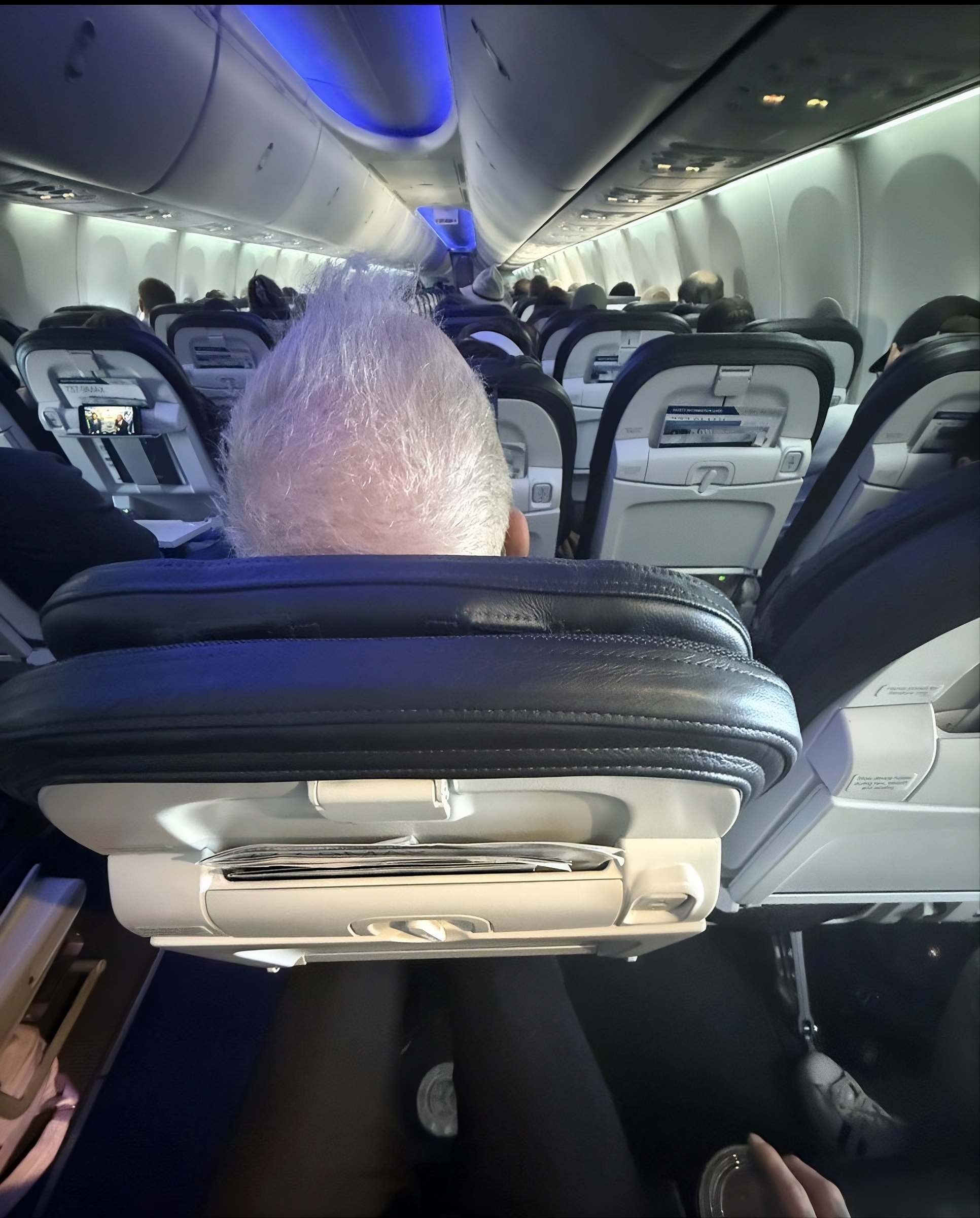
Passengers increasingly are on their own, especially in economy. You won’t find seat back entertainment screens on American Airlines, Southwest, or Alaska – or Spirit and Frontier. That’s the province of Delta, United and JetBlue.
And even where the airline entertains you, you may prefer your own content. There’s not enough room to open your laptop from most seats, and hunching over it for hours at a time is anything but relaxing or good for your back and spine.
So customers figure out the best bring your own device ergonomics themselves. Airlines created the “bring your own screen” world. And there’s a whole genre of socail media dedicated to ‘hacks’ filling the missing hardware to achieve comfort and ease.
Seat designers keep reinventing tablet and phone holders (or omitting them), and passengers build their own.
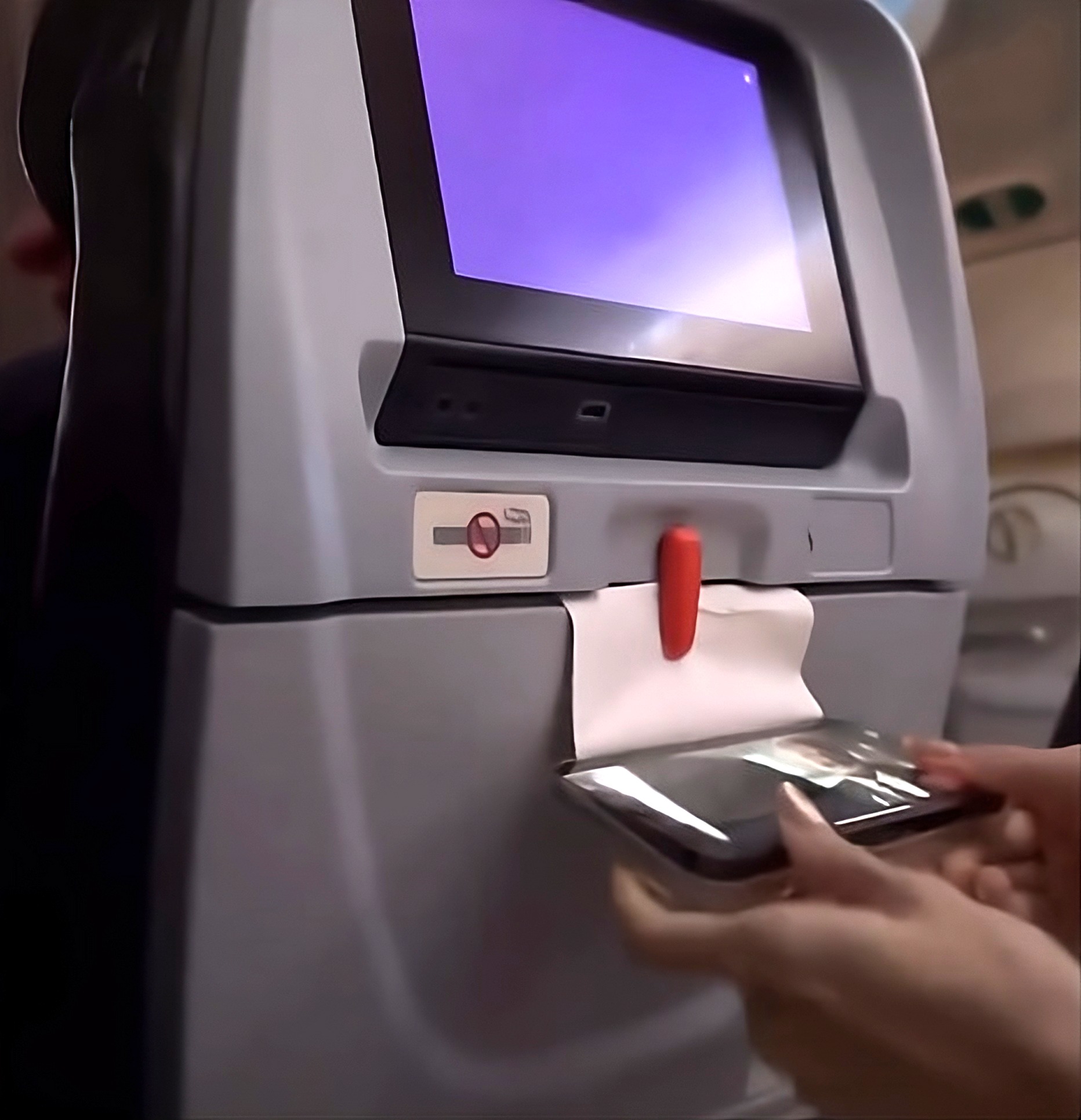
Here this seat has a screen – but the passenger wants to stream their own content. Not every passenger uses the screen, but almost all passengers like the option (and it looks great in the cabin).
Simple but work everytime pic.twitter.com/Phw1nhtJDx
— nindi (@nindianiq) December 13, 2025
This is a good one, but people also use airsickness bags.
Flight hack: passenger uses air sick bag to mount smartphone for easier movie viewing (bag has been threaded through the back of the case) @SouthwestAir pic.twitter.com/2hspprXSnZ
— Joel Pollak (@joelpollak) July 1, 2024
And the headrest cover (“antimacassar”) doubles as entertainment center:
Your baseball cap is really a fully functional home theater system.
Here’s the Ziploc bag trick (and you probably have one of these for your TSA-compliant liquids):
Empty drink cans even double as a phone stand on your tray table:
When you need an impromptu phone stand
byu/findingmeno inlifehacks
Here are the do’s and don’ts of do-it-yourself:
| Do This | Don’t Do That | |
| Use a purpose-built tray-table clip/hinge mount (or a case with a stand) | Don’t wedge your phone into seat parts (hinges, recline gaps, armrest seams) | |
| Mount centerline (behind your own tray/seat), keep it tight | Don’t cantilever it off to one side or into your neighbor’s sightline | |
| Keep screen at eye level (as close as you can) | Avoid watching on your lap for hours | |
| Download offline (or pre-load) before boarding | Don’t depend on streaming/Wi‑Fi for must-watch content | |
| Use short cable routing (port → device) and coil slack | Don’t string a cable across the tray edge / aisle side | |
| Use subtitles and low brightness | Don’t blast brightness in a dark cabin (also conserves battery) | |
| Stow the setup fast for meals / landing | Don’t build a “rig” that takes 2 minutes to dismantle | |
| If you do “bag hacks,” use something you brought (clean pouch, elastic strap) | Don’t use the airsickness bag as a structural part | |
| Prefer non-marking contact points | Don’t use adhesives, tape, suction cups on seat materials |
Several airlines offer built-in phone or tablet holders. The usefulness varies. For instance:
- Southwest: new RECARO seatbacks include a personal electronic device holder.
- Alaska Airlines: retrofitted cabin includes an adjustable tablet holder at eye level.
- Hawaiian Airlines: A321neo main cabin seats feature tablet holders
- American Airlines: Most domestic narrowbodies offer seatback personal device holders