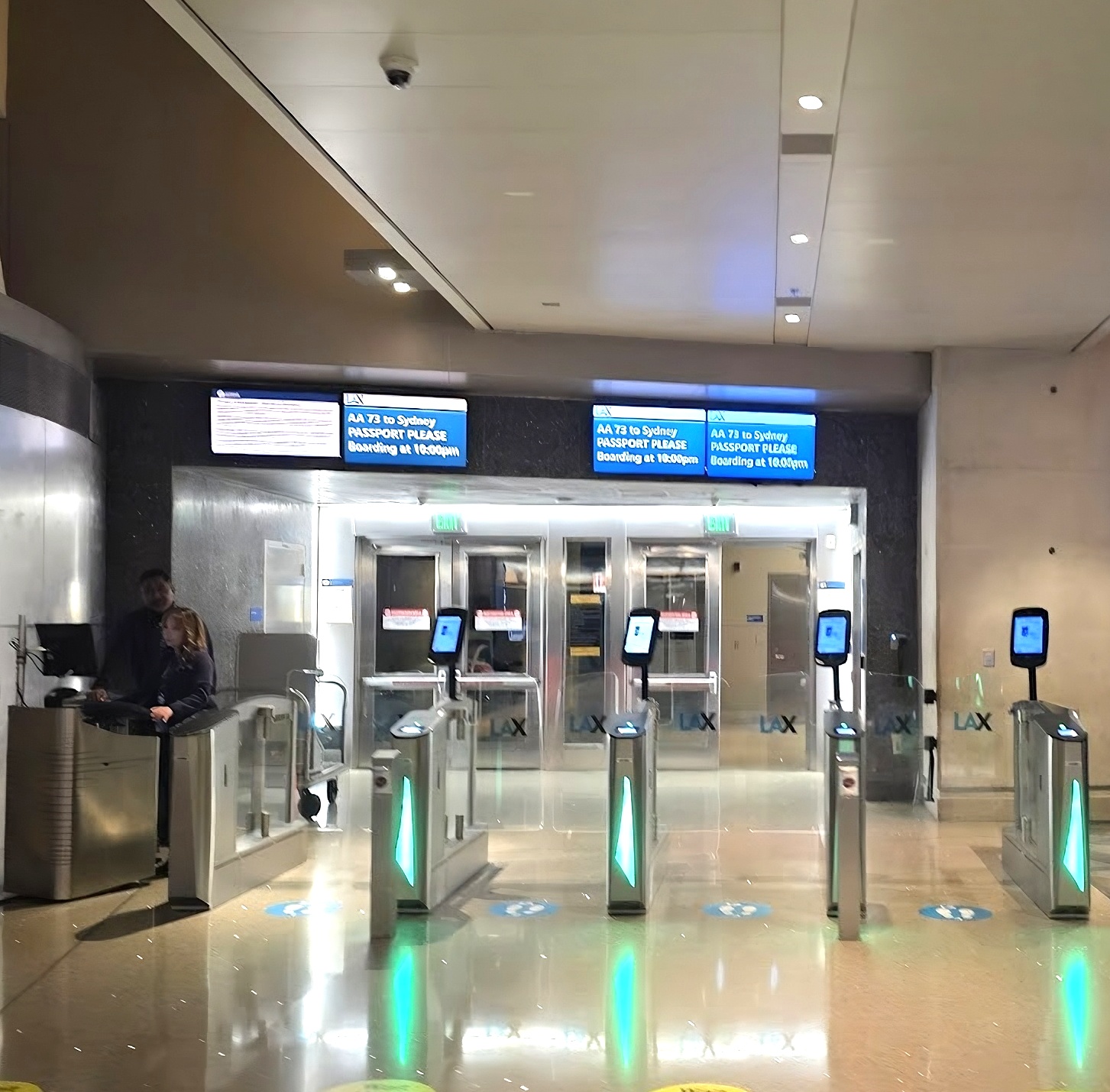
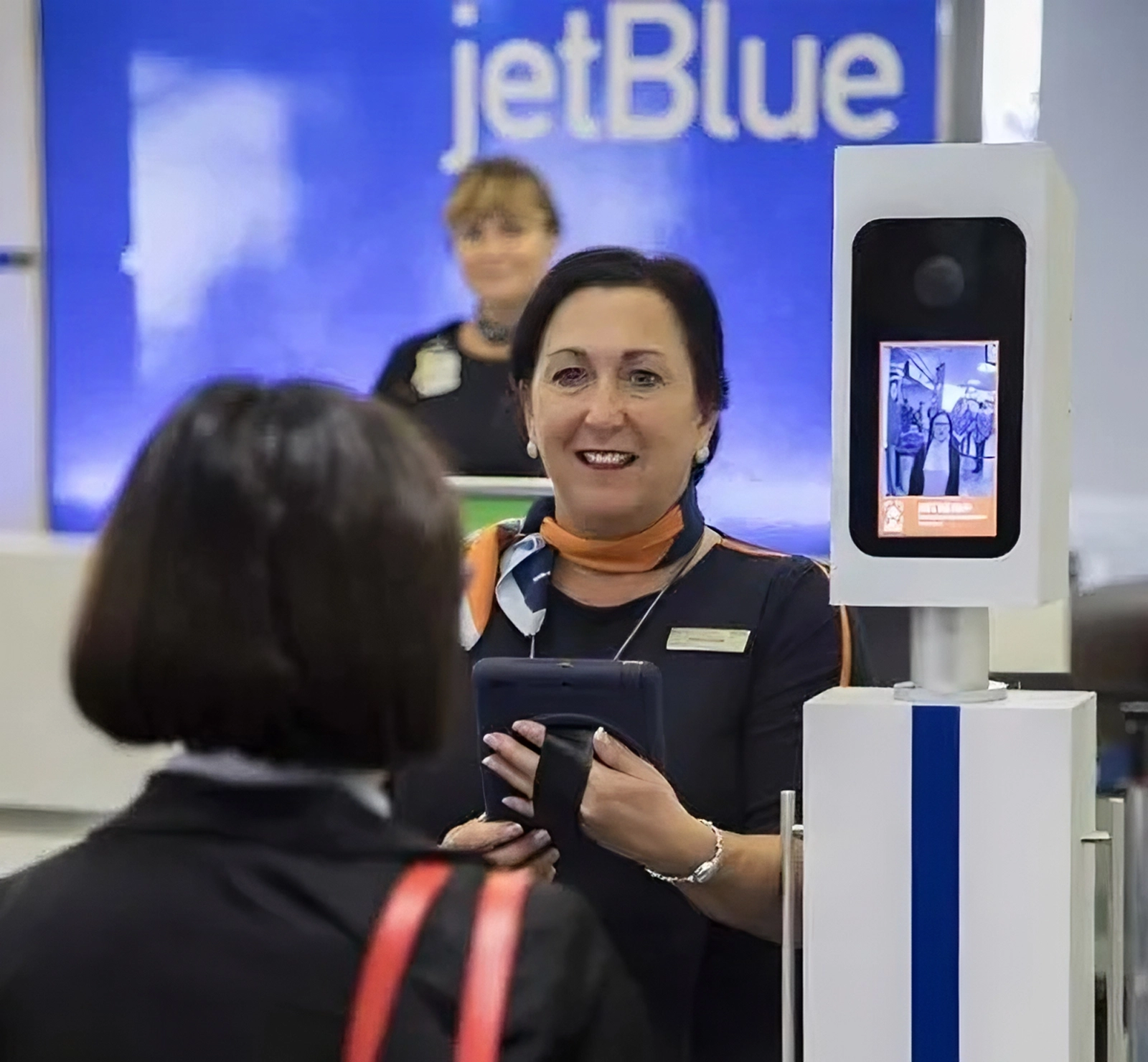
Airports are moving to e-gates, where facial recognition is used to confirm identity. The government wants more than a person looking at you and confirming it against the photo in your passport.
Here’s an e-gate with passengers in robes and face veils. I think it’s Tampa? I’m sure readers will know. The system needs an unobstructed face to match a live image to the passenger’s ID. And there’s a lot of cheering of passengers needing to uncover veils to identify themselves.
- I don’t like societies forcing women to cover their face
- But I also don’t like government impinging on a woman’s freedom to do so
I also don’t like biometric scanning as a condition of exercising the right to travel. But once that’s accepted, there’s also nothing wrong with having people uncover themselves – in fact, that’s how it works in Muslim societies.
Leftist’s are FURIOUS after a video goes viral of Muslim women having to show their faces before getting on a plane..
Thoughts?? pic.twitter.com/zBMn720arn
— American AF (@iAnonPatriot) December 16, 2025
At many international departure gates, a camera is mounted at the gate or held by a government customs officer or airline staff member, to take a live photo of each passenger during boarding.
That image is sent to the Customs and Border Protection cloud-based Traveler Verification Service, which compares each person’s mugshot to a gallery built from your passport or visa photo and compares it to the flight manifest. The government has already checked the flight manifest and decided who can travel and who can’t. Now they want to match people against the manifest. If there’s a match, you’re allowed to depart the country. If there’s no match, you get a manual document check.
Here, social media comments are overwhelmingly cheering enforcement due to anti-Muslim sentiment, which I take to be a function of the account that posted the video (“no more concessions / assimilate / ‘Islam incompatible’”). There’s no concern for civil liberties, privacy, or religious accommodation (or these biometric gates slowing boarding).
Identity verification requires seeing a face. Whether it’s a human doing a manual comparison or an algorithm doing a match, you can’t verify a passport photo against a fully covered face. But there are plenty of ways to do it:
- public vs private area
- same-gender staff availability
- brief lift vs full removal
Generally, in Muslim societies a woman’s face and hands are not awrah (not required to be covered. In Egypt, face coverings are permissible but not required. So showing the face for routine needs is fine, and “only to female officer in a private room” is an extra-strict practice.
There are societies treating covering of the face as required in front of non-mahram men, but even there usually there are carve outs for necessity like courts and identification. Even among people who treat niqab as religiously required, there are accommodations that allow showing the face for identification purposes.
It’s how UK government tells officials to handle face coverings when security ID checks are needed, and you’ll see separate lanes or rooms, with female staff, in Saudi Arabia. And they’ve been deploying e-gates integrated with visas and biometrics.
Historically, the U.S. didn’t have exit controls. The government vetted people entering the country, but there was no checkpoint to leave. Now we have “biometric exit.” The program is authorized by 8 U.S.C. § 1365b which originated with 2001’s PATRIOT Act and was further developed in the Enhanced Border Security Act of 2002. This makes us more like the rest of the world. But being more like Saudi Arabia in this way is not a good thing?
More From View from the Wing
Link da fonte